

Mobilization of women in Ukraine: who needs to update their data in the TCC, when and how to do it
The topic of “mobilizing women” is often surrounded by rumors: that “everyone will be put on the register,” “everyone will be taken,” or that “online updates = a draft notice.” In reality, the key issue is military registration and the accuracy of personal data in the register. For most women, mobilization is not mandatory; however, if you belong to categories that are already registered or are subject to registration, the rules on notifying/updating data apply in the same way as for other persons liable for military service.
Below is a structured guide: who exactly is subject to registration, who needs to update data and when, how to do it online/offline, and what the consequences are for missing deadlines.

Which women are subject to military registration and mobilization
Women with medical/pharmaceutical education and relevant specialties
In Ukraine, women who have obtained a medical or pharmaceutical specialty are subject to mandatory military registration (provided they meet the age and health criteria).
Women with a medical or pharmaceutical education must register within 60 days after graduation (provided they meet the age and health criteria).
In practice, this means:
- if you have a diploma in a medical or pharmaceutical specialty and meet the age criteria, registration is not “optional” — it is mandatory under the rules;
- being on the register does not equal automatic mobilization (more on this below).
Other categories of women who may be liable for military service under the law
For other specialties, the general rule is: women may register voluntarily if their education/profession corresponds to the military-registration specialties defined by the Ministry of Defense.
A separate practical group includes women who:
- have already served and hold a military registration document;
- serve under contract or served previously;
- have reservist status (or entries in the register as persons liable for military service).
Voluntary nature of women’s participation in mobilization
Most importantly: military registration ≠ automatic call-up. Even if a woman is on the military register, it does not mean she will be “mobilized tomorrow.” Registration is needed for planning resources and for communication between the state and those liable for service.
Is mobilization of women in Ukraine mandatory?
Legal basis and current rules
Under current rules during martial law, there is no blanket mandatory mobilization of women as a group. For women (including those who are registered), there is no default mandatory call-up; however, the registration rules must be followed.
The principle of voluntariness for women
For the overwhelming majority of women, entry into service is voluntary — typically through a contract and for positions where a specific specialty is needed, under the established procedures.
Exceptional cases (e.g., voluntary contract)
The most typical “exception” in practice is when a woman deliberately chooses to serve under contract or already has the status of a service member/reservist and falls under staffing decisions within the service.
Why data must be updated with the TCC
The importance of up-to-date data for military registration
Updating data is not a formality. The data in the register are needed to correctly determine your status (liable for service/reservist/not subject), to provide administrative services and generate an electronic military registration document, and to avoid situations where “the register shows one thing, reality another,” which creates questions and legal risks.
Why updating is part of the registration rules during martial law
The basic rule: if a conscript/person liable for service/reservist has changed personal data, they must update them within 7 days (via the electronic cabinet/Reserve+ or by contacting the registration authority). Separately, after moving to a new place of residence, you must register at the new address within the established time limits. The basis is the Military Registration Rules (CMU Resolution No. 1487).
This is the legal core behind most “fine stories”: not the fact of moving or changing a phone number itself, but the failure to notify/update the data in time.
What counts as a change of data
The most typical changes you must report/update:
- address of residence/stay (including declaration/registration);
- contact details;
- marital status (to the extent it affects registration data);
- health status/disability status (if officially established);
- education, workplace, position (when relevant to registration data);
- change of name (e.g., after marriage/divorce) and/or replacement of passport/ID;
- changes to identification document details.
Which women must update their data
Women who are already on the military register
If you already have the status of a person liable for military service (a military registration document/an entry in the register), you are subject to the general rules on reporting changes in data.
Women who were entered automatically (medical/pharmaceutical professionals)
If you are a medical/pharmaceutical professional and your data could have been added to the register through data exchange/lists, the key task is to check what exactly the register shows and, if necessary, correct/clarify it (especially contact details and address).
Women reservists with entries in the Unified Register
If you are a reservist or have the corresponding status in the register, updating data is critical because your status, documents, and official communication depend on its accuracy.
How to update data with the TCC
Via Diia and the Reserve+ app
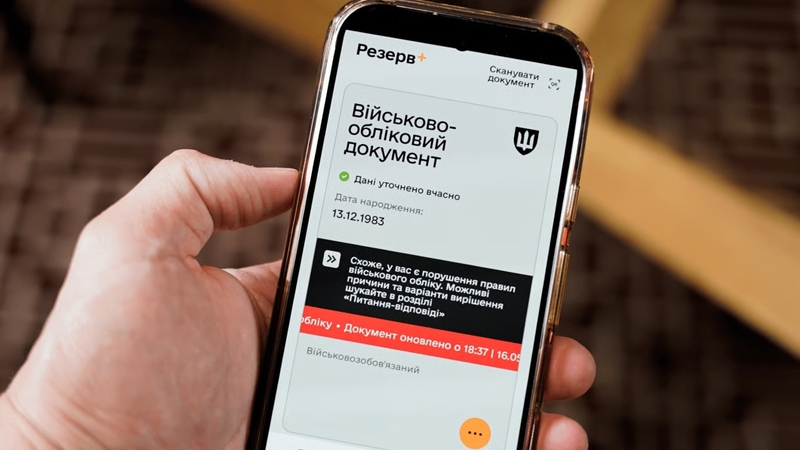
Reserve+ is the official electronic account/app where you can update personal data and see information about your status in the register.
What people usually do in Reserve+:
- authorization (BankID);
- verification of records;
- submission/update of data or a request to correct an error;
- monitoring the status after the update.
With Diia, it’s important to distinguish: Diia can display an electronic military registration document, which is generated if the register contains up-to-date data. If the data have changed, the document often needs to be generated/updated again.
Separately, changes of residence (declaration/registration) may go through state systems, but your task is to ensure the military registration database has actually reflected the changes.
In person at the TCC and SP
The offline route remains important when identification/document checks are needed; when changes are complex (status, registration category, errors in data); or when electronic identification is not possible.
Through CNAP or other official means
CNAP helps with certain administrative procedures (e.g., declaring/registering a place of residence), but updating military registration data must be done separately — via Reserve+ or by contacting the TCC and SP (and verifying that the changes are reflected in the register).
Deadlines for updating data
Dates and time frames
The basic rule: if your address or other personal data change, you must, within seven days, notify the registration authority/update the data in the prescribed manner.
Practical tip: don’t wait until the last day — sometimes updates in the systems do not appear instantly, and errors are easier to fix right away.
What counts as missing the deadline
A miss occurs when a change has already taken place (e.g., you declared a new address, replaced documents, changed marital status), but the notification/update was not made in time as required.
Typical disputes in administrative cases about deadlines
The most common points of dispute are: whether the person was properly informed of the obligation; whether there is evidence of the change (date of registration, date of document issuance); whether there is proof that the person attempted to update the data (application number/screenshot, system errors/refusals, etc.).
Therefore, it is useful to keep confirmations: application number, screenshot, receipt, incoming stamp, etc.
Consequences of failing to update data on time
Fines ranging from UAH 17,000 to UAH 25,500
For violations of military registration rules during a special period, administrative liability is possible. In practice, fines for citizens may range from UAH 17,000 to UAH 25,500 depending on the legal qualification and circumstances.
Possible restrictions or other consequences
In addition to the fine, in practice there may be summonses to clarify data; administrative procedures that stall because the system shows outdated data; and difficulties generating/using an electronic military registration document if the register data are not current.
On issuing or restoring a military ID during martial law — procedure and documents.
Exceptional cases and tips
If you missed the deadline: update your data as soon as possible; gather proof of why you could not (lack of access, illness, technical failures, being abroad, etc.); if a protocol/decision is drawn up — act within appeal deadlines and consult a military law attorney, especially if there were violations of notification procedures.
Tips and recommendations
How not to miss data updates
Periodically check what Reserve+ shows (address, contact details, status). After changing your address/documents, handle the update immediately.
What to do when your place of residence/marital status changes
Record the date of the change (when it was declared/registered, when the document was issued). Within seven days, update the data through the available channels. Then verify that the changes have actually been reflected in the register.
Practical recommendations for healthcare professionals
If you have a medical/pharmaceutical education, check your status in the register and the correctness of your data (especially address and contact details). Don’t confuse registration with mobilization: registration is about data and status; mobilization requires separate legal grounds and a separate procedure.

Frequently asked questions
Which women are subject to military registration and mobilization in Ukraine?
Mandatory registration applies primarily to women with medical/pharmaceutical education (subject to age and fitness criteria). For other specialties, registration is mostly voluntary, according to the relevant lists of military-registration specialties. A general “mandatory mobilization of women” as a mass rule is not applied in practice; instead, service is mostly voluntary/under contract.
When must data be updated with the TCC and SP?
In case of a change of address or other personal data — within seven days, notify the registration authority/update the data in the prescribed manner.
What documents are required to update data?
It depends on the change, but usually: passport/ID; proof of residence; documents on marital status (if needed); documents on education/specialty (critical for medical/pharmaceutical fields); medical documents/conclusions — if health status/registration category changes.
Through which channels can data be updated (online and offline)?
Online: Reserve+. Offline: TCC and SP. Additionally, some administrative procedures (e.g., residence registration) may be processed through CNAP and state information systems — but you should always verify that the military register has been updated.
What consequences can there be for late updating of data?
Administrative liability is possible. In practice, a fine of UAH 17,000–25,500 may apply depending on the legal qualification of the offense and circumstances.
Conclusion
Mobilization of women in Ukraine is not a “mass mandatory campaign,” but primarily a matter of military registration and correct data in the register. If you are already on the register (or are subject to registration, in particular as a medical/pharmaceutical professional), your responsibility is simple: update personal data on time — within 7 days after changes — via Reserve+ or official offline channels.
If you need help with military registration or appealing a fine/decision, contact Pravovyi Lider attorneys.

Leave a request for consultation and our specialist will contact you soon!
Leave a request and our specialist will contact you soon!




Fill out the form or contact us in any way convenient for you
Choose the nearest office to you and receive consultations in a convenient format for you