
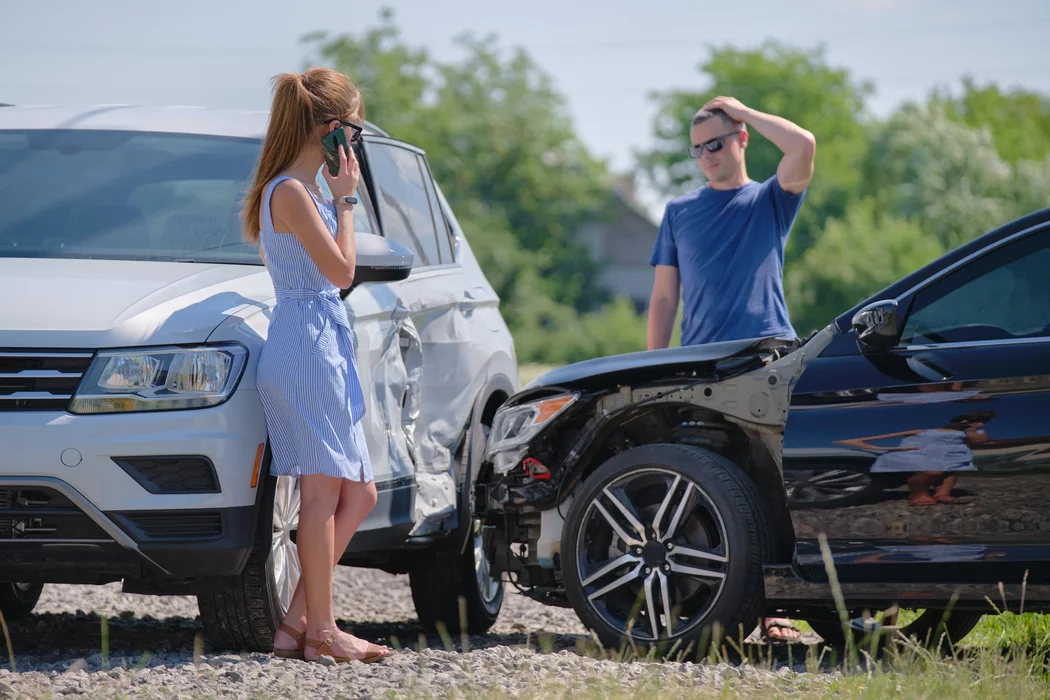
Actions after a traffic accident: what to do first and how to fill out a Europrotocol without penalties
A road traffic accident is stressful, but your first actions determine whether you can resolve the situation quickly, obtain insurance compensation, and avoid additional problems. Below is a practical guide: what to do immediately after a crash, when you can use the European Accident Statement (paper or electronic “Europrotocol”), when the police are mandatory, and which mistakes most often lead to an insurer’s refusal or fines.
This material covers typical collisions with property damage (vehicle damage). It does not replace an individual legal consultation in complex cases: injuries, disputes over fault, lack of insurance, suspected intoxication, damage to third-party property, significant losses, etc.

What to do first immediately after an accident
Safety at the scene
- Stop immediately, switch on your hazard lights, and stay at the scene.
- Place a warning triangle so other drivers have time to react.
- Assess risks: heavy traffic, poor visibility, fuel leaks, smoke, and the risk of a secondary collision.
If it’s safe, ask passengers to move off the roadway to the shoulder or behind a barrier. Don’t create additional hazards—sometimes it’s better to secure the scene first and only then document the circumstances in detail.
Duty to assist the injured
If there are victims, medical assistance is the priority. Call emergency services (103) and the police (102). If possible, provide first aid and keep the scene safe until medics arrive.
Do not move injured persons unless absolutely necessary (an exception is an immediate life threat at the scene). Even if someone says they are “fine,” be cautious: symptoms can appear 20–60 minutes later. If there are injuries (or a suspected injury), the Europrotocol does not apply.
Documenting the circumstances (photos / video)
Do not rush to move the vehicles until you document the scene. Take a series of photos and a short panoramic video.
- wide shots of the scene (lanes, markings, signs, traffic lights, weather);
- positions of the vehicles relative to each other before moving them;
- license plates of both vehicles;
- close-ups of damage from several angles;
- debris, skid marks, fluid spills on the road;
- location markers: street nameplate, building number, kilometer marker, nearest intersection.
If possible, record driver documents and MTPL (ОСЦПВ) policies of both parties (photos or written data exchange). If you have a dashcam, save the file immediately and make a copy to prevent overwriting.
What the Europrotocol is and why it’s needed
Concept and legal significance
The Europrotocol is an accident notice that the participants can complete themselves without police involvement. Insurers use it as the basis for settling an MTPL (ОСЦПВ) claim. It can be completed on a paper form or electronically via the relevant service.
Benefits of handling without police (time savings and fewer risks)
The main benefit is speed. You don’t need to wait for a patrol; typically no on-site police report is issued, and participants may leave after properly completing the notice. In standard cases, this reduces the risk of additional administrative consequences—provided all Europrotocol conditions are met.
At the same time, the Europrotocol is not a “universal solution.” If the conditions are not met (injuries, no agreement, more than two vehicles, etc.), attempting to use it can lead to disputes with the insurer and wasted time.
When the Europrotocol is equivalent to police paperwork
When all Europrotocol conditions are met, you may skip calling the police. The notice (paper or electronic) confirms the accident and contains the information needed for insurance settlement. After filing it, participants may leave the scene and clear the roadway.
Conditions for using the Europrotocol
No injured or deceased
The Europrotocol applies only when there are no injured or deceased persons. If there is any suspicion of injury (pain, dizziness, nausea, worsening condition), call medics and the police.
Drivers agree on the circumstances
The parties must fully agree on how the crash occurred: where the contact happened, what maneuvers were being performed, and which damage resulted from this accident. If one driver disagrees with the diagram or refuses to sign, the Europrotocol is not suitable.
Valid MTPL (ОСЦПВ) policies for both parties
Both drivers must have valid MTPL policies. Check the expiry date and policyholder details. If a policy is expired, doubtful, or the driver refuses to show it—call the police.
No alcohol/drug intoxication
The Europrotocol does not apply if there are signs of alcohol/drug intoxication or the influence of medications that impair attention or reaction. In such a case, document the scene and call the police.
If the situation is escalating into an insurance dispute or you need formal statements/requests, contact an insurance lawyer.

Step-by-step: completing the Europrotocol
How to fill the paper and electronic forms correctly
Before filling in, make sure all Europrotocol conditions are met. Then act calmly and consistently.
Complete the paper form legibly with a single pen, without blank fields. Carefully enter: date and time, address, driver details, vehicles, insurers and policy numbers, contact phones. Draw a crash diagram: directions of travel, lanes, signs/markings, point of impact, and vehicle positions (as required by the form).
The electronic Europrotocol is convenient when you have Internet access and a smartphone. The service limits the time to complete the form (once you start, it’s best to finish without delays). It highlights required fields and reduces the risk of missing key data. After completion, save the confirmation/notification number and take screenshots of key steps.
Photos/videos—why they matter
Photo/video documentation is crucial, especially if the other party later changes their story or the insurer requests clarifications. Capture not only damage, but also the road environment (markings, signs, traffic lights), as this often determines crash mechanics. If there are witnesses, record their contacts.
Submitting documents to insurers within the deadlines (up to 3 business days)
Notify your insurer as soon as possible—ideally the same day. As a rule, notification must be made within three business days: provide the accident notice and the vehicle’s location, then submit the Europrotocol, photos/videos, and other documents requested. Keep proof of submission (claim/case number, email, screenshot, receipt).
When you must call the police
Presence of injured persons
If anyone is injured—or there’s a suspicion of injury—the Europrotocol does not apply. Warning signs include: neck/back/head pain, nausea, dizziness, disorientation, coordination issues, bleeding, or visible injuries. In such cases, call 103 and 102.
Act sequentially: secure the scene, provide first aid if possible, and do not move victims unless absolutely necessary. Document the scene with photos/videos where it is safe to do so. When there are injuries, police prepare the paperwork, and in some cases criminal proceedings may be initiated.
Start collecting medical documents and recording consequences right away; later this may be needed for non-pecuniary damage claims.
More than two vehicles involved
The Europrotocol is intended for crashes involving two vehicles. If there are more participants (chain collisions, damage to multiple cars, public transport involved, secondary impacts, etc.), you must call the police.
In multi-vehicle crashes, it’s important to establish the sequence of events and the primary impact, which is usually impossible to document correctly using a two-party notice. Until the police arrive, document the positions of all vehicles, directions of travel, the road environment, debris, and damage to each vehicle.
No agreement or discrepancies on circumstances
If the drivers do not fully agree on the circumstances, do not fill out the Europrotocol “just to have something.” Discrepancies may concern not only fault but also details: which lane each vehicle was in, whether the turn signal was on, the exact point of contact, and which damage resulted from the crash.
Best tactic: calmly state that without agreement you will call the police; document everything with photos/videos; do not sign a document whose wording or diagram you disagree with. If the other driver pressures you or behaves aggressively, avoid escalation and wait for the patrol.
No insurance for one of the parties
If any participant lacks valid MTPL (or the policy’s validity is doubtful), call the police. Without insurance, compensation becomes more complicated, and properly prepared police materials are often the foundation for later claims.
On site, record the license plate, driver details (if provided), and take photos/video of the damage and location. Involve witnesses if possible. Don’t agree to “cash on the spot” without clear written safeguards—if the payment is refused later, you’ll need to prove the fact and the amount of damage.
Insurance settlement and avoiding fines
Submission deadlines
The key rule is to notify your insurer promptly and submit the required documents. In practice, don’t delay: the faster you report, the fewer grounds for questions and disputes.
If the insurer schedules an inspection or requests additional explanations, respond promptly and keep correspondence and proofs. Delays are a common reason for payout issues or prolonged settlement.
MTPL compensation rules
Under MTPL, damage to property and (under separate rules) harm to life/health is compensated within policy limits. In Europrotocol cases, payment is made within those limits provided the notice is completed correctly and the evidence supports the stated circumstances.
Remember: the insurer assesses not only the presence of damage, but also crash mechanics. That’s why a clear diagram, scene photos, and consistency between damage and the impact pattern matter.
Actions that lead to refusals or fines
- leaving the scene without a Europrotocol or police where police are mandatory;
- using the Europrotocol when there are injuries or no agreement on circumstances;
- errors/omissions in key data (policy, vehicle, driver) or an unclear diagram;
- failing to notify the insurer on time and having no proof of submission;
- attempting an “oral settlement” without written confirmation and without documenting damage;
- driving after the crash with signs of intoxication or refusing a test—risk of liability under Art. 130 of the Code of Administrative Offenses.
Common mistakes and driver tips
Frequent mistakes when filling out
- not listing all visible damage or describing it too generally;
- drawing a diagram without lanes, directions of travel, markings, and signs;
- leaving blank fields or making corrections after signing;
- failing to document the scene with photos/videos before moving vehicles;
- not checking the other party’s MTPL validity.
What if the other party won’t cooperate
If the other driver refuses to provide documents, behaves aggressively, disputes facts, or tries to leave—don’t waste time arguing. Record the license plate, shoot video, involve witnesses, and call the police.
Avoid provocations and physical confrontation. Legally, evidence and proper paperwork matter—not who argues louder.
Evidence tips for the insurer or court
Keep your complete evidence file: photos/videos, witness contacts, correspondence with the insurer, proof of submissions, and towing/storage invoices (if any). If you doubt the other party’s good faith or foresee a complicated settlement, an early auto-lawyer consultation is often cheaper than trying to “fix mistakes” after a denial.

FAQ
When can I handle a crash without police using the Europrotocol?
When there are no injured persons, exactly two vehicles are involved, both have valid MTPL policies, there are no signs of intoxication, and the drivers fully agree on the circumstances and damage.
What documents do I need for the Europrotocol?
A driver’s license, vehicle registration certificate, and MTPL policy (paper or electronic). For electronic filing you’ll also need a smartphone and Internet access.
Can I avoid a fine if I used the Europrotocol?
The Europrotocol allows you to lawfully document a crash without police if all requirements are met. If they’re not (injuries, no agreement, more than two vehicles, no insurance, etc.), using it won’t protect you from legal consequences.
What if the parties can’t agree on the circumstances?
Call the police. Without agreement, the Europrotocol does not apply. Meanwhile, document the scene and damage with photos/videos.
What are the deadlines for submitting the Europrotocol to the insurer?
Notify your insurer as soon as possible, preferably the day of the crash. Provide the Europrotocol and evidence within the deadlines established by law and your insurer’s procedures. Best practice is not to delay and to keep proof of submission.

Leave a request for consultation and our specialist will contact you soon!
Leave a request and our specialist will contact you soon!

Fill out the form or contact us in any way convenient for you
Choose the nearest office to you and receive consultations in a convenient format for you