
The procedure for appealing a police report after a traffic accident: common mistakes and how to avoid them
After a traffic accident, drivers often say: “I’ll appeal the protocol.” In practice, it’s important to distinguish two stages: (1) working with the case file before a decision is issued (explanations, objections, motions, evidence), and (2) appealing the ruling/decision if it was not in your favor.
The protocol does not establish the “guilty” party, but it sets the initial version of events. Therefore, errors in time/place, the description, the diagram, or the evidence can become decisive—if you record them in time and support your position with proof.
What is an administrative protocol after a traffic accident
The concept of a protocol and its legal force
An administrative protocol (protocol on an administrative offense) is a procedural document compiled by the police when they identify signs of an administrative offense in connection with a traffic accident. In many ДТП cases, the materials are forwarded to court for consideration.
The protocol records the “starting” data: time, place, a brief description, the legal provision invoked, participants, witnesses, and explanations. Final conclusions about the presence (or absence) of the offense are made during the case review.
What data the protocol must contain and why it matters for further review
The court often begins its analysis with the protocol. If it lacks mandatory details or contains contradictions, it weakens the protocol as evidence and creates reasonable doubt about the police version.
The protocol should include: the date/place of drafting, the officer’s details, the driver’s details, the place/time and essence of the event, the provision establishing liability, data on witnesses and victims (if any), the person’s explanations, and other required information. In practice, the most critical points are the accuracy of time/place, the description of maneuvers, and whether your explanations are actually recorded.
Also check whether the protocol indicates that your rights were explained (the right to provide explanations, submit evidence, file motions, use legal assistance). The absence of such a note—or a perfunctory “no explanation provided” where you tried to explain—can support an argument of procedural violations.
Most common police errors when drafting a protocol
Incorrect date/time/place of the accident
An error in time or address can break the case logic: the protocol no longer matches dashcam footage, CCTV, geolocation, or the 102 call timeline. That inconsistency creates reasonable doubt about the accuracy of the record.
Also verify the direction of travel, lane, and how the location is described (intersection/kilometer marker/landmarks)—these details affect priority rules and visibility.
- Cross-check the time with dashcam timestamps, phone geolocation, CCTV, and any 102 call record you have.
- Add photos tied to signs/buildings/kilometer markers if the location description is vague or inaccurate.
Inaccurate description of the circumstances
A common issue is template wording without verifiable details (maneuver, trajectory, signs, road markings, traffic light phases, distances). Without specifics, the conclusion about a violation can look unsubstantiated.
Fix your alternative version in writing and support it with evidence; request objective recordings if they could capture the scene.
- State your alternative version of events briefly in writing and support it with evidence: video, photos, witnesses.
- Request objective materials: body-cam footage, nearby surveillance cameras, patrol-car video—if they could have captured the moment or the scene.
Absence of explanations or pressure on the driver
Your explanations are the foundation of your defense. If they weren’t recorded—or you weren’t given a real chance to provide them—you will have to “catch up” later in court.
Insist that your explanations be included in the protocol or attached on a separate sheet. If you disagree, record your disagreement in writing, calmly and without эмоцій.
If you are signing without being allowed to add your position, write in the “remarks” section that you requested time/opportunity to provide explanations but were not given it.
Insufficient fixation of evidence or its absence
If the file contains only the protocol and a rough sketch—without photos/video and without fixing signs/markings/road conditions—the evidentiary base is weak. This supports an argument that the offense is not proven.
- Keep original dashcam files and make backups.
- Act quickly to request body-cam/surveillance footage before it is overwritten.
Errors in the accident diagram and with witnesses
The accident diagram is sometimes made in haste and without “anchors”: it doesn’t show actual markings/signs, the point of impact, debris, or skid marks. Such defects weaken the materials.
There are also “formal witnesses” without contacts, or people who did not see the impact itself.
- Compare the diagram with your photos/videos; if there are discrepancies, submit your own explanation/diagram with references.
- Record eyewitness contacts immediately and, if possible, get a short written statement.
Grounds for challenging the protocol after an accident
Procedural violations in document preparation
Procedural violations are strongest when you show their impact on your right to defense or on accurate fact-finding. Typical issues include missing details, vague wording, omitted explanations, incorrect attachments, and problems with the diagram or witnesses.
Insufficiency of evidence and contradictions in the file
In traffic cases, causality matters. If the protocol contradicts the diagram/explanations or objective evidence (video, photos, camera data), you argue that the elements of the offense are unproven.
- A working formula: “The conclusion stated in the protocol is not supported by evidence / contradicts the evidence in the case file.”
Violation of the participant’s rights
You have the right to give explanations, submit evidence, file motions, obtain legal aid, and appeal a decision. If you were effectively prevented from exercising these rights (your explanations weren’t attached, motions were ignored or refused without reasons), document it and use it in court.
Using these grounds in court
In court, a strong structure is: facts → errors/violations → evidence → motions → clear request to the court. The more verifiable details and the fewer emotions, the stronger your position looks.
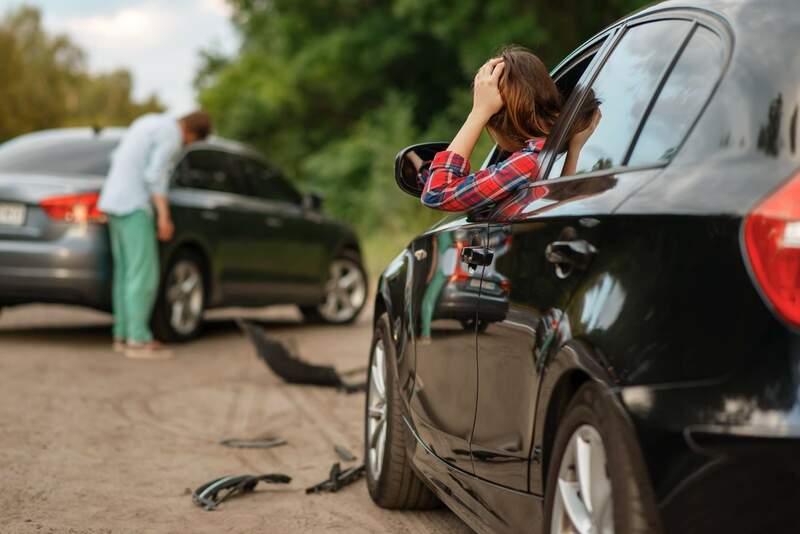
How to challenge a protocol — step-by-step
In everyday speech, people say “appeal the protocol.” Formally, the protocol is part of the case file: you submit explanations, objections, evidence, and motions during the consideration of the case. You may separately complain about police actions, but such a complaint does not automatically “cancel the protocol.” The key procedural outcome is the ruling/decision—this is what you appeal within the statutory term.
Deadlines for appeals (10 days or other terms)
Do not confuse the protocol and the ruling. The protocol is evidence/materials; objections and motions are made within the case review. The “10 days” most often refers to appealing the ruling (decision) on an administrative offense.
Important practical point: the appeal period is usually tied to the date you received the ruling or were properly notified of it (and, in some categories of cases, special service rules may apply). Therefore, immediately check the ruling date and the date of receipt/service—so you don’t miss the deadline.
Where to file: police, court, higher instances
Objections and motions are filed to the body that considers the materials (often a court in ДТП protocol cases). If a judge has already issued a ruling, the appeal is filed with the appellate court through the local court that issued the ruling.
How to properly draft objections to the protocol
Keep your objection short and readable: your version of the event, defects in the protocol/diagram, evidence, and motions—each in a separate section.
- Your version: 5–7 sentences describing the accident mechanism and why you disagree with the protocol.
- Errors: time/place/description, diagram, witnesses, absence of explanations, lack of evidence.
- Evidence: video, photos, witness statements, documents.
- Motions: obtain video, question witnesses, order an expert examination (if needed).
Appeal and next steps
In the appeal, focus on specifics: which evidence was ignored or not assessed, which violations were left unaddressed, and how that affected the conclusion. Cite the case materials and attach proof of receipt/service dates where relevant.
Collecting evidence for a successful challenge
Photos/videos from the accident scene
Objective recordings (dashcam, CCTV) resolve most disputes. Photos are useful when they show context: markings, signs, traffic lights, visibility, and vehicle positions.
Keep originals and make backups; if possible, preserve time/location metadata.
- Panorama of the scene + ties to signs/buildings.
- Vehicle positions before moving them (if safe).
- Close-ups of damage and traces/debris.
Witness statements
A witness is strongest when they saw the key maneuver or the moment of impact and can explain their vantage point. Get contact details and a short written statement, and be ready to ensure their appearance in court if needed.
Independent examinations (auto-technical, trace analysis)
An expert examination is appropriate when the accident mechanics cannot be established without special knowledge (trajectory, point of impact, technical ability to avoid). To make it effective, prepare clear questions for the expert and provide complete materials: photos/videos, the diagram, road-condition data.
If there’s already an expert opinion in the case, check its methodology and inputs. If necessary, consider challenging the auto-technical examination or requesting an additional/repeat one.
Lawyer’s tips: how to avoid mistakes and strengthen your defense
The importance of legal support
A lawyer helps build and “package” your evidence: what to request, how to word motions, and how not to miss deadlines. This is especially important when there is no video or the accident mechanics are disputed.
What to do at the scene to minimize risks
At the scene, fix the facts and make sure your position appears in the file. Verify details in the protocol and diagram and insist on attaching your explanations.
- Photos/videos of the scene, signs, markings, traffic lights.
- Witness contacts and a short statement.
- Written disagreement and remarks to the protocol.
How to prepare for the court hearing
Prepare a concise position: your version, protocol errors, evidence, motions. Check that video files open and play correctly, and that witnesses know the hearing date/time. If you plan to request an expert examination, draft the questions in advance.
Separately from the administrative case, you may seek compensation for accident consequences—particularly compensation for non-pecuniary damage where there is documented suffering, treatment, limitations of ordinary life, or other non-material losses.
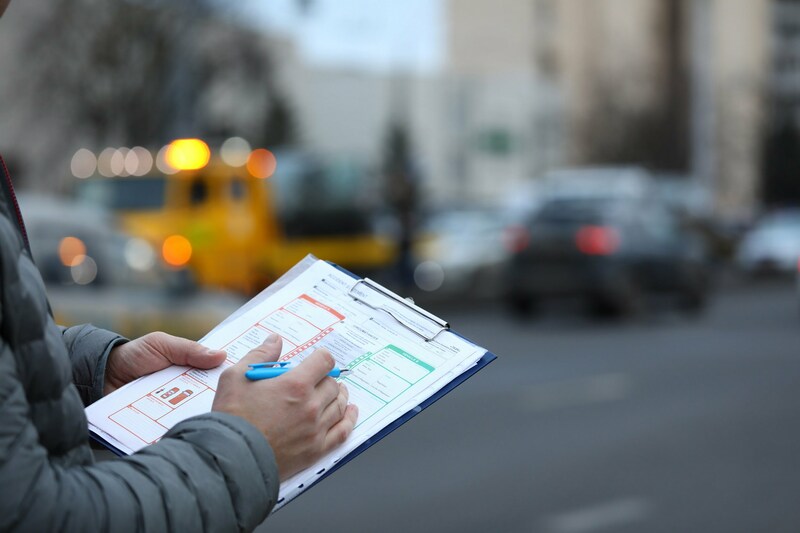
FAQ
How long do I have to “appeal the protocol” after a traffic accident?
The protocol is part of the case file; you submit objections and motions about it during the consideration of the case. The “10 days” usually refers to appealing the ruling (decision). If the deadline was missed for valid reasons, reinstatement may be possible upon request.
Can I challenge the protocol without a lawyer?
Yes. You can submit explanations, evidence, and motions yourself. A traffic-accident lawyer is most helpful in complex cases: requesting video, ordering an expert examination, and systematizing contradictions.
What protocol errors are the most significant?
Those that affect fact-finding or your right to defense: errors in time/place, vague description, critical flaws in the diagram, omitted explanations, “formal” witnesses, and lack of evidence or contradictions between materials.
Where to file objections or a complaint about the protocol?
Objections and motions are filed to the body hearing the case (often a court). If a judge’s ruling has been issued, the appeal is filed with the appellate court through the local court.
How to prove the protocol is invalid in court?
Show that the protocol cannot be a sufficient basis for liability due to procedural violations, contradictions, and lack of evidence. Attach objective materials (video/photos), file motions to obtain recordings, and, if necessary, request an expert examination.
Legal framework: the Code of Ukraine on Administrative Offenses (in particular, Art. 256 — protocol content; Art. 268 — rights of a person; Art. 289 — appeal deadline; Art. 294 — appellate procedure), and the Traffic Rules of Ukraine.

Leave a request for consultation and our specialist will contact you soon!
Leave a request and our specialist will contact you soon!

Fill out the form or contact us in any way convenient for you
Choose the nearest office to you and receive consultations in a convenient format for you