
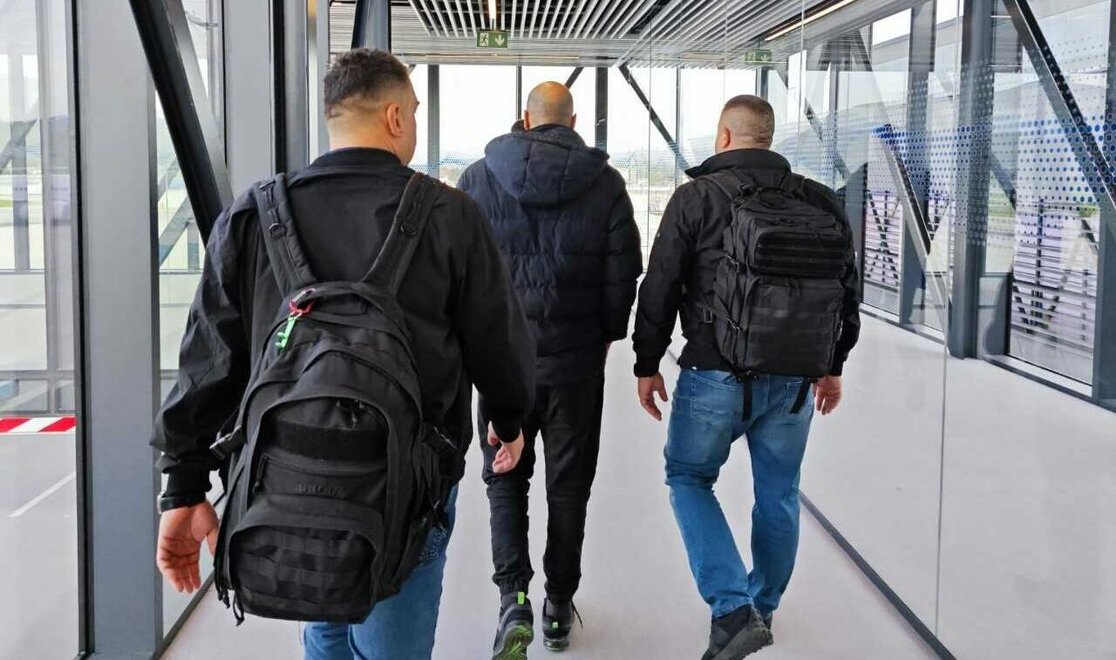
Forced expulsion of foreigners and stateless persons from Ukraine: what you need to know
Forced expulsion from Ukraine is one of the most severe measures applied to foreign nationals and stateless persons who violate the rules of stay or pose a security threat. It involves not only removal beyond Ukraine’s state border, but also a multi-year entry ban and serious consequences for any future legalization.
Below is an overview of the legal grounds for forced expulsion, a step-by-step outline of the procedure, the rights a foreign national has, and practical ways to challenge unlawful decisions.
Legal framework for forced expulsion
Statutory grounds (Law “On the Legal Status of Foreigners and Stateless Persons,” Art. 30)
The primary act governing the stay of foreigners in Ukraine is the Law of Ukraine “On the Legal Status of Foreigners and Stateless Persons” No. 3773-VI. It defines who is considered a foreigner, sets out rights and obligations, and provides for measures such as forced return (Art. 26) and forced expulsion (Art. 30).
Under Article 30, forced expulsion is possible only on the basis of an administrative court ruling issued upon a claim by the State Migration Service of Ukraine (SMS), the State Border Guard Service, or the Security Service of Ukraine (SBU). It is applied when a person has failed to comply with a forced-return decision or there are reasonable grounds to believe they will evade its execution. The law therefore distinguishes an administrative decision on forced return from the stricter measure—forced expulsion—which always requires a court ruling.
Relevant rules and related legislation
The actions of the SMS, border guards, and the SBU during forced return and expulsion are regulated by a special Instruction on the Forced Return and Forced Expulsion of Foreigners and Stateless Persons, approved by a joint order of the MIA, the State Border Guard Service, and the SBU. It details which authority acts, within what time limits, and using which document forms.
The Code of Administrative Procedure of Ukraine contains specific rules for handling cases on detention, forced return, and forced expulsion, including expedited time limits for consideration and appeal. It is also important to account for the prohibition on forced return or expulsion to a country where a person faces torture, the death penalty, persecution, or other serious human-rights violations (the non-refoulement principle).
Grounds for forced expulsion
Violations of the law on the legal status of foreigners
The typical starting point is a breach of the rules of stay: overstaying the lawful period, lacking valid documents, engaging in unlawful employment, residing at an address other than that indicated in documents, and other violations of migration law. In such cases, authorities usually first issue a forced-return decision with a time limit for voluntary departure.
If the foreigner does not respond to the SMS’s demands, ignores notifications, or deliberately absconds, the case may progress to forced expulsion, which requires a judicial decision.
Evasion of a forced-return decision
The key ground for applying Article 30 is failure to comply with a forced-return decision within the prescribed period without valid reasons, or the presence of reasonable grounds to believe the person will evade its execution.
As a rule, a forced-return decision grants up to 30 days for voluntary departure. If the person does not leave Ukraine within this period, the SMS, the SBU, or the State Border Guard Service may file a claim with an administrative court seeking forced expulsion.
Other grounds (threats to security or public order)
Another group of grounds covers situations where a foreigner’s actions run counter to Ukraine’s national security interests or threaten public order, public health, or the rights and freedoms of others. In such cases, the competent authorities may act more promptly and strictly.
Even then, the state must assess human-rights risks and comply with the ban on returning persons to countries where they face torture or persecution. This balance between security and human rights is often the subject of litigation.

Forced expulsion procedure
Typical sequence: forced return → court claim → enforcement
The procedure most often looks like this:
- Identifying a violation or conduct that creates grounds for action.
- Issuing a forced-return decision (by the SMS, the SBU, or the border guard authority).
- Granting a period for voluntary departure (up to 30 days), sometimes with an entry ban for several years.
- If there is non-compliance or a risk of evasion—filing a claim with an administrative court for forced expulsion.
- Court review, a ruling, and (where applicable) an appeal.
- Enforcement of the court ruling: migration or border authorities organize departure, escort to the border, or transfer under a readmission procedure.
In practice, forced expulsion is usually the second stage that follows forced return. Courts typically assess whether a forced-return decision was issued and whether the person had a real opportunity to comply.
Time limits and authorities involved
Administrative cases on forced expulsion are generally considered on an expedited basis—often within a few days from when the claim reaches the court. These cases also have shortened appeal deadlines.
Forced-return decisions are issued by the State Migration Service, the Security Service of Ukraine, and the State Border Guard Service (especially in cases involving persons apprehended in controlled border areas). The same authorities may file claims for forced expulsion.
Temporary holding facility and escort to the border
Foreign nationals who lack legal grounds to stay in Ukraine may be detained and placed in a Temporary Holding Facility for Foreigners and Stateless Persons for the period needed to identify them and arrange expulsion, but for no longer than 18 months.
The SMS or the border guard authority may initiate placement in such a facility and must follow the required notification procedures. Enforcement of a forced-expulsion ruling (arranging travel documents, purchasing tickets, escort to the border) is carried out by migration or border authorities; if expulsion was initiated by the SBU, that body is notified of enforcement.
Consequences and risks
Entry bans and “deportation” terminology
The key consequence of forced expulsion is a multi-year entry ban to Ukraine (often five years or more, depending on the decision). A forced-return decision can also be accompanied by an entry ban (commonly up to three years).
In everyday language, the term “deportation” is often used. Formally, Ukrainian law uses “forced expulsion,” but for the individual the practical effect is similar: removal from the country coupled with a long-term entry ban and negative implications for future status.
Possible detention and retention of documents
A person subject to forced expulsion may be detained to ensure execution of the court ruling or readmission. Detention is typically justified by a risk of flight, evasion, or the absence of documents required to leave Ukraine.
While held in a temporary facility, identity documents are usually retained by the administration and freedom of movement is significantly restricted, which creates additional pressure—especially for undocumented persons or those with an uncertain status.
Impact on future legalization
A forced-expulsion ruling significantly complicates any later attempt to legalize status in Ukraine, even after an entry ban expires. A history of migration violations and non-compliance with official decisions negatively affects the assessment of good faith in future applications.
Where a person may qualify as a refugee or as needing complementary protection, expulsion is closely connected with the international-protection procedure—and mistakes at the early stages may jeopardize the person’s ability to remain in a safe country.
Rights of the person and options for appeal
How to appeal a forced-expulsion ruling
A court ruling on forced expulsion may be appealed within the statutory time limit (often around ten days, depending on the procedural rules applicable to the case). A timely appeal commonly suspends enforcement until the appellate court reviews the case.
For this reason, it is critical not to miss the appeal deadline and to contact a migration-law attorney as soon as possible.
Case law and key principles
Courts, including the Supreme Court, have repeatedly emphasized that forced expulsion generally presupposes a prior forced-return decision and that authorities must consider personal circumstances: health, family ties, the presence of children who are Ukrainian citizens, and other relevant factors.
In many cases, courts have quashed forced-return or expulsion decisions due to a formalistic approach by the authorities, insufficient proof of violations, or failure to consider humanitarian aspects and human-rights risks.
Key procedural rights
During the procedure, the foreigner has the right to legal assistance (including representation by an attorney), to an interpreter if they do not speak Ukrainian, and to review case materials and evidence and submit explanations and documents.
If there is a risk of persecution, torture, or serious threats to life or liberty in the country of origin, the foreigner has the right to apply for refugee status or complementary protection. In such cases, expulsion generally cannot be enforced until the protection application is finally decided.
Special cases and practical nuances
Foreign students and stateless persons
Foreign students often face expulsion risks due to dismissal from an educational institution, late renewal of a temporary residence permit, or formal document errors.
In such situations, it is crucial to restore or change the basis for stay (transfer to another institution, change of permit type) before the matter escalates to forced-return and expulsion. Stateless persons are a particularly complex category: identification and documentation difficulties can result in lengthy stays in temporary facilities, sometimes approaching the maximum period.
Readmission, border detention, and occupied territories
Some foreigners are expelled under readmission procedures provided by Ukraine’s international treaties: Ukraine transfers the person to the country of origin or a third country with which a relevant agreement exists.
For individuals detained in controlled border areas while attempting or after unlawfully crossing the border, forced-return and expulsion measures are often initiated by border guard authorities, and the person may be transferred to the neighboring state’s border authorities.
In wartime and in the context of temporarily occupied territories, issues of a safe destination country and the real feasibility of enforcement take on additional dimensions that must be addressed in legal defense.
Common mistakes
Frequent mistakes include ignoring letters and summons from the SMS or the border service, signing documents without an interpreter and without understanding their contents, remaining passive in court, missing appeal deadlines, and failing to seek international protection in time when there is a real risk of persecution.
Such errors can turn a situation that could have been resolved by renewing documents or changing the basis for stay into a forced-expulsion case with a long entry ban.
FAQ
What grounds allow forced expulsion?
The main grounds are failure to comply with a forced-return decision within the prescribed period without valid reasons, or reasonable grounds to believe the person will evade its execution. Threats to national security or public order may also be relevant, but decisions must still comply with human-rights safeguards.
Can a forced-expulsion ruling be appealed?
Yes. An administrative court ruling on forced expulsion can be appealed within the statutory period. A timely appeal generally suspends enforcement until the appellate court completes its review.
How long can a person be held in a temporary facility?
If a person is placed in a temporary holding facility to ensure enforcement, the total period of stay may not exceed 18 months.
What rights does a foreigner have during the procedure?
The foreigner has the right to an attorney, to an interpreter, to review case materials, to submit evidence and explanations, and to appeal decisions in court. If they face persecution, torture, or other serious rights violations in the country of origin, they may apply for international protection, which must be considered in the process.
What should you do if you face forced expulsion?
Act immediately: contact a migration-law attorney, gather all documents that support your status and personal circumstances (permits, family and medical documents, etc.), and track appeal deadlines. Do not sign documents you do not understand; insist on an interpreter and ensure your explanations are properly recorded in the case file.
How we can help
Pravovyi Lider provides comprehensive assistance to foreigners and stateless persons facing forced return or expulsion. We analyze your situation, check the legality of decisions by the SMS, border guards, or the SBU, prepare objections, claims, and appeals, and represent your interests in court and before migration authorities.
We help challenge forced-return and expulsion decisions, prepare a document package for legalization (permits, change of grounds, family reunification, etc.), protect the rights of persons potentially in need of international protection, and support cases involving foreign students, employees, and entrepreneurs.
You can obtain a free initial consultation via the website form or by calling the number listed in the contacts section.

Leave a request for consultation and our specialist will contact you soon!
Leave a request and our specialist will contact you soon!
More useful information




Fill out the form or contact us in any way convenient for you
Choose the nearest office to you and receive consultations in a convenient format for you