

Who is eligible to arrange care for a person with a disability?
The question “who is entitled to provide care for a person with disability group II” is regulated by Art. 41 of the Law of Ukraine “On Mandatory State Pension Insurance,” CMU Resolution No. 558 dated 23.09.2020, and Pension Fund guidelines. Care for a person with group II disability may be formally arranged by an adult able-bodied representative— a relative, guardian, custodian, or another trusted person who has concluded a written permanent care agreement with the person with a disability or their legal representative. Mandatory conditions include: absence of official employment income, sufficient insurance record (for counting the care period toward pension service), cohabitation or a notarized care agreement if residing at different addresses, and the consent of the person with a disability.
To receive payments and have the period counted toward service, the candidate must prove actual caregiving: submit a home inspection report, copies of utility bills paid jointly, and a certificate from the State Tax Service confirming no entrepreneurial income. Violation of these requirements is grounds for refusal or termination of compensation.
What documents are needed to arrange care?
For arranging care for a person with group II disability, the key document is the electronic decision of EKOPFO (Expert Commission for Assessment of Daily Functioning), which states the disability group and includes the wording “requires constant external care.” Attach an application, passports and tax numbers (RNOKPP) of both parties, certificates of residence, and, if needed, an individual habilitation plan. All files are accepted on paper or as PDFs via Diia or the eHealth account, so it’s best to prepare high-quality scans in advance.
The fact of care is confirmed by a home inspection act and an extract from the caregiver’s employment record book; when addresses differ, add a notarized care agreement or a court decision on guardianship. Bank details for compensation and, when applying via the ASC (CNAP), the submission receipt complete the package and help the review pass quickly and safely.
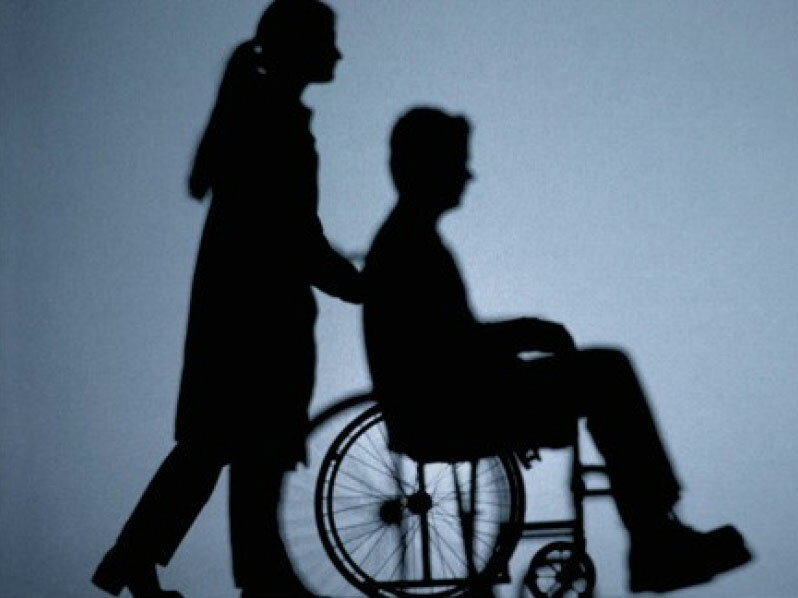
Where to apply: step-by-step procedure
If you’re unsure how to arrange care for a person with group II disability, front-office specialists will provide a memo with steps and timelines. Monetary compensation is granted by the Department of Social Protection (USZN), and service is credited by the Pension Fund of Ukraine (PFU). In many communities you can apply through the ASC (CNAP)—the front office will forward the package between agencies. Booking a queue slot online via Diia shortens waiting time at reception.
- The attending physician issues a referral (electronic form 088-o/EKOPFO).
- EKOPFO conducts the assessment, issues a decision in the e-system, and provides a paper extract if needed.
- Collect the document package and check completeness (consult at USZN or ASC/CNAP).
- Submit documents to USZN/PFU in person, through ASC/CNAP, or via an e-application in Diia.
- Track status and upload missing items through your online account.
- Receive the decision and open an account for disability care payments.
The review period is usually 10–15 business days, but in large cities it can reach 25 days. Keep all registration numbers and receipt copies—these prove your submission date in case of delays.
Medical-social expertise: how to obtain the conclusion
Since 1 January 2025, EKOPFO (Expert Commissions for Assessment of Daily Functioning) have replaced MSEC. A family or specialist physician creates an electronic referral in eHealth, after which the patient is examined at a cluster hospital: experts assess ability for self-care using the International Classification of Functioning methodology. The decision is automatically saved in the electronic record and is available for download via Diia or the personal account.
If the conclusion states “requires constant external care,” submit the PDF along with other documents to USZN or the Pension Fund. The commission issues its decision within five business days; you can appeal within 30 days to the regional clinical-expert council or in court, and a repeat assessment may be initiated if the health condition changes.
What payments and compensations are available?
As of 1 July 2025, payments for caring for a person with group II disability due to general illness amount to 1,865 UAH per month (35% of the subsistence minimum). The state pays the unified social contribution (USC), so the care period counts toward the caregiver’s pensionable service.
Municipal top-ups and one-time targeted payments operate in some regions, and banks offer preferential servicing for social cards. A person with a disability is also entitled to free medical support and provision of technical rehabilitation aids—from walkers to anti-bedsore mattresses.
Important nuances: when can they refuse?
The most common reason for refusal is the absence in the EKOPFO conclusion of the explicit wording “requires constant external care”; without this phrase, social protection authorities consider the person capable of self-care. Refusals are also frequent due to incomplete or expired document packages: outdated residence certificates, unsigned home inspection acts, or errors in passport data. Another barrier is the caregiver’s official employment or entrepreneurial activity, since compensation is paid only to individuals without income, as well as the absence of the required insurance record confirmed by the Pension Fund.
One more typical ground is “service duplication,” when the person with a disability already receives care in an institutional facility or another social assistance of the same type is in place. Refusals may also be triggered by formalities: different addresses without a notarized care agreement, outstanding tax liabilities, or data mismatches in registries. In most cases, the issue is resolved by a repeat daily functioning assessment, supplying missing documents, or correcting errors; if the USZN’s position remains unchanged, the decision can be appealed administratively or in court within 30 days.

How can a lawyer help you arrange care quickly?
A specialist prepares the electronic medical package, accompanies the client during the EKOPFO assessment, drafts all applications and complaints, notarizes the care agreement, and represents interests before the PFU, USZN, and, if necessary, in court. This end-to-end support removes bureaucratic delays: compensation and service crediting are granted much faster, and the risk of refusal is minimized. Legal assistance for disability care is especially useful when you need to recover arrears or prove the right to a municipal top-up—our practice shows that timely involvement of a lawyer nearly halves the processing time.
Frequently Asked Questions (FAQ)
Which documents confirm disability?
The key confirmation now is the EKOPFO electronic decision specifying the disability group and, where applicable, the phrase “requires constant external care.”
An individual habilitation plan providing a detailed description of rehabilitation measures and the needed scope of assistance serves as additional proof; both documents are submitted to social protection authorities or the employer in paper or electronically via eHealth or the Diia app.
Can care be arranged remotely?
You can submit an e-application to USZN or the Pension Fund via Diia or your eHealth account, attaching scans of all required documents.
However, the initial EKOPFO assessment and notarization of the care agreement are only conducted in person, so the process cannot be completed fully remotely at this time.
What liability does a caregiver bear?
Providing false information entails an administrative fine of up to 1,700 UAH and repayment of funds. If harm to the health of the person with a disability occurs, criminal proceedings under Art. 125 of the Criminal Code are possible.
The PFU may cancel compensation and exclude the care period from pensionable service, so it is important to keep inspection acts, certificates, and other documents confirming actual care.







What they say about us
Leave a request for consultation and our specialist will contact you soon!

Хочу подякувати старшому юристу Валентині Миколаївні за допомогу у сімейній справі. Вона супроводжувала мене під час розлучення та поділу майна — все пройшло спокійно й без зайвих нервів. Завдяки її порадам я змогла захистити свої права та уникнути конфліктів. Дуже вдячна за чуйність і професіоналізм!
Щиро дякую старшому юристу Валентині Миколаївні за допомогу у військовій справі. Завдяки її професіоналізму та уважності питання було вирішено швидко й позитивно. Рекомендую як компетентного фахівця!
Бажаю . Задоволен надонною !нформац!ею. Допомогли з визначенням в моему питанн!. Дуже допомогли з правово!! Сторони. Бажаю добра та мирного неба.
Дякую вам за відмінну вашу працю . Рекомендації: все активно, старанно, швидко!
Дуже вдячна Катерині Колотуха за співпрацю і вирішення мого питання у суді!!!У свідоцтві про народження була допущена помилка,яку треба було виправити.Катерина дуже кваліфіковано віднеслась до роботи,я ні за що не хвилювалась,вся робота була зроблена з її сторони на найвищому рівні і за найкоротший час.Рекомендую Катерину як дуже відповідального і практичного спеціаліста своєї справи!
Дякую за надану інформацію,гарне відношення ,чітке пояснення та розуміння мого питання. Зокрема, Алініі Віталіївні,до якої потрапила на безкоштовну консультацію.
Fill out the form or contact us in any way convenient for you
Choose the nearest office to you and receive consultations in a convenient format for you