

Disciplinary penalties in the Armed Forces of Ukraine: what they are actually punished for and how to appeal
Disciplinary action often comes not for what people usually imagine under the word “violation.” In theory it’s about combat discipline, but in practice it’s about paperwork, wording, “reported the wrong way,” and “filed it the wrong way.” Sometimes a sanction becomes a tool of pressure in a conflict; sometimes it’s a way to “close the issue” quickly, without a real review. In this article: what people are actually punished for, what penalties are imposed, and when this can (and should) be appealed.
What a disciplinary penalty is in practice, not in theory
It’s not a criminal case and not a “court,” but the consequences are very real. A disciplinary penalty affects your reputation within the unit, can complicate transfers, influence incentives and payments, and sometimes your further career and the command’s attitude. The worst part is often not the fact of a “reprimand” itself, but that it later surfaces where you don’t expect it: in character references, reports, and when other issues are being considered.
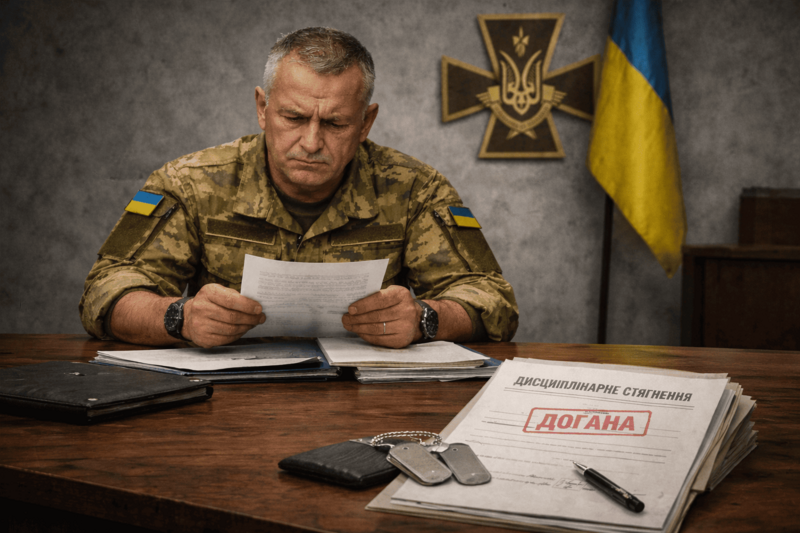
What people are actually punished for most often
- Being late
In reality this can mean being late for formation, returning from a task with a delay, or not being at a specific point at a specific time. People get punished because it’s easy to record and convenient to document “by the book.”
- Leaving the place of service without “criminal” intent
When someone steps away “for 20 minutes,” goes to handle a бытове issue, and doesn’t formalize it properly. They punish because formally it looks like a disciplinary violation even if the intent was normal.
- Violating reporting procedure and subordination
Addressed someone the wrong way, reported the wrong way, “spoke sharply,” sent a message instead of submitting a report. They punish because it’s often framed as “undermining discipline” and tied to the authority of the command.
- Absence from an activity because it was “not documented correctly”
You can actually be on a task / in treatment / on the road, but the paperwork wasn’t closed on time. They punish because the log says “absent,” and explanations appear later.
- Failure to carry out an order or “partial completion”
In practice this can be an order like “do it by evening,” without resources and without clear criteria. They punish because almost any outcome can be labeled “partial completion.”
- A conflict with a commander — not because of actions, but because of the form
The substance may be correct, but the tone / delivery / publicity is “wrong.” They punish because disciplinary measures sometimes respond not to a violation, but to “inconvenience.”
- Violating internal rules (phones, uniform, appearance)
A phone “in the wrong place,” a uniform “not according to regulations,” an appearance that “doesn’t comply.” They punish because these are quick, visible things that are easy to demonstrate as “restoring order.”
- Mistakes in documents, reports, and submissions
A wrong date, an incomplete package, the wrong approval route. They punish because “paper” is control, and mistakes are a convenient basis for claims.
- “Formally there is a violation, but in reality there isn’t”
For example, a person couldn’t meet a requirement due to circumstances (communications, transport, mission), but this wasn’t reflected. They punish because they assess the formal trace, not reality.
- Collective responsibility
When “everyone is guilty” because it’s easier. They punish because they don’t want to investigate individually or there’s no evidence against a specific person.
What penalties are imposed and why they are dangerous
Most often it’s a reprimand or a severe reprimand; sometimes deprivation of incentives (bonuses, commendations, etc.). Separately there are “service” consequences: worse character references, blocked transfers, increased scrutiny over any minor detail. The key point: even a “minor” penalty can come back later when you’re dealing with a completely different issue.
When a disciplinary penalty CAN and SHOULD be appealed
- you were not properly informed or were not given a real opportunity to respond;
- no explanation was taken from the servicemember, or it was “written from someone’s words”;
- there is no evidence of the violation (only words/assessments without facts);
- the documentation/review procedure was violated;
- the order was vague, contradictory, or clearly unrealistic without resources;
- the punishment is disproportionate to the situation (a “heavy” sanction for a minor issue);
- you are made “guilty for everyone” without individual establishment of circumstances.
How a disciplinary penalty is appealed, in plain language
- Fix the fact and the documents. Where, when, what penalty, who signed it, how you were informed. Ask for copies or at least take photos of what exists.
- Collect evidence. Witnesses, messages, logs, route/orders, certificates, proof of circumstances (communication issues, assignment, treatment).
- Submit a report/complaint on the merits. Calmly: what happened, what’s wrong in the procedure/facts, what you request (cancel/review).
- Deadlines are critical. Don’t delay with “I’ll deal with it later”: if you miss deadlines, it becomes harder to prove the situation is disputable.
If you don’t respond, the file keeps only one version — the version of the person who оформил the penalty. Later it’s harder to “turn it around.” If you’re unsure, it’s better to contact a lawyer.
Mini-case
A client of LLC “Pravovyi Lider” — a servicemember of the Armed Forces of Ukraine — sought legal assistance after a disciplinary penalty was imposed on him for an alleged violation of military discipline.
Essence of the situation
The commander of the military unit applied a disciplinary penalty (a reprimand with deprivation of additional payments), referring to improper performance of official duties. At the same time:
- no full internal investigation was conducted;
- no written explanation was taken from the servicemember;
- objective circumstances were not taken into account (being under medical treatment and documented valid reasons);
- the order did not contain proper justification or references to specific legal norms.
In fact, the decision was made in violation of the requirements of the Disciplinary Statute of the Armed Forces of Ukraine and the principles of individual responsibility.
Actions of the attorneys
The team of LLC “Pravovyi Lider” carried out a legal analysis of the commander’s order, the materials of the internal review, and the applicable legislation.
It was established:
- lack of evidence of a disciplinary offense;
- violations of the procedure for bringing to responsibility;
- the type of penalty did not correspond to the gravity of the alleged violation;
- failure to observe guarantees of the right to defense.
The attorney prepared a reasoned complaint to higher command demanding cancellation of the disciplinary penalty as unlawful and unfounded.
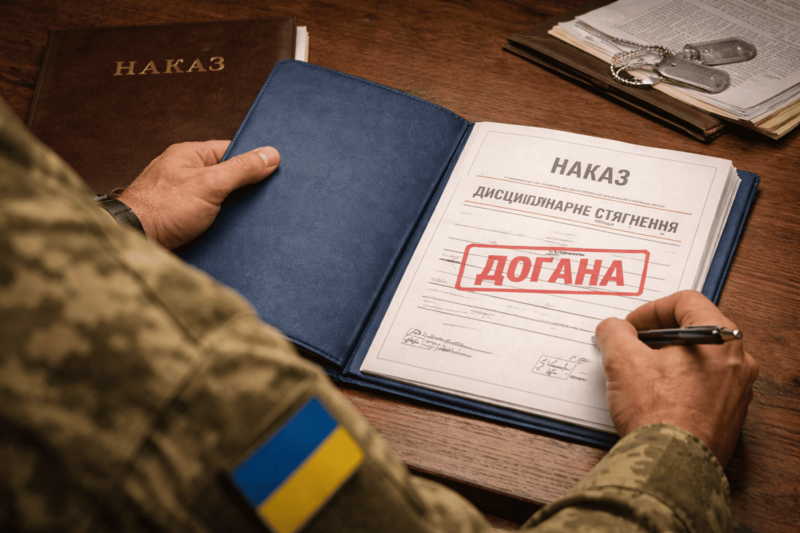
Result
As a result of the review of the complaint:
- the order on disciplinary liability was cancelled;
- information about the penalty was removed from the personal file;
- payment of the due monetary allowance was restored.
This case confirms that even under martial law, disciplinary liability of servicemembers must be applied exclusively in compliance with legal requirements and procedural guarantees.
Discipline is about order, but discipline ≠ lack of protection. If a penalty “landed” because of a formality, a conflict, or a broken procedure, it doesn’t mean you have to accept it. Check whether everything was documented correctly, whether there is evidence, and whether the punishment is proportionate. An appeal is possible even when it seems there are no chances — especially if a military lawyer is nearby.

Leave a request for consultation and our specialist will contact you soon!
Leave a request and our specialist will contact you soon!




Fill out the form or contact us in any way convenient for you
Choose the nearest office to you and receive consultations in a convenient format for you