
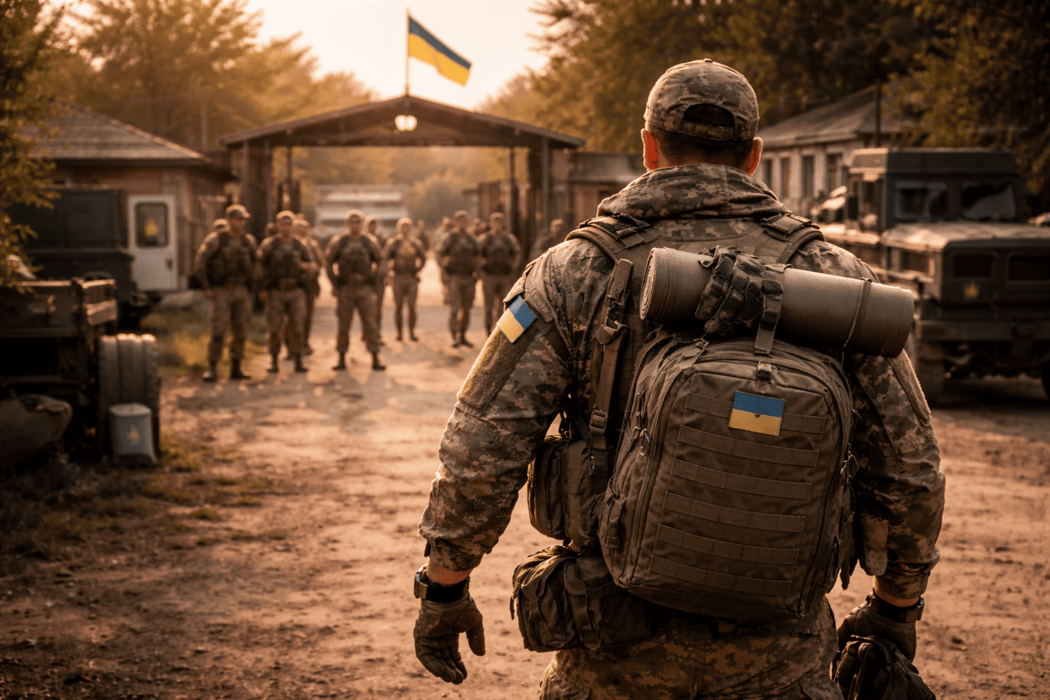
Return after AWOL: Article 407 of the Criminal Code, reserve battalion, referral letter, and what to do
Returning after AWOL is not just showing up at a military unit—it’s a procedure that depends on many factors: the length of absence, whether there is a case in the Unified Register of Pre-Trial Investigations (URPTI), whether this is a first-time incident, and whether the commander agrees to let you continue service. In some situations, the issue can be handled through the Military Law Enforcement Service (VSP) and a reserve battalion; in others, you may already need to work with an investigator, a prosecutor, or the court. That’s why after AWOL, it’s important not to delay and to act according to the right algorithm.
What AWOL is and what liability Article 407 of the Criminal Code of Ukraine provides
What is considered unauthorized leaving of a unit
AWOL is not only when a servicemember unlawfully leaves a military unit or place of service. It also includes failing to report on time, without valid reasons, after leave, treatment, a business trip, transfer, or after being released from the unit’s location. In other words, for qualification, it’s not only the fact of leaving that matters, but also the fact of not returning within the specified time. This is where a dangerous mistake often occurs: a person thinks that if they “didn’t run away” but simply didn’t return after treatment or leave, then it’s not AWOL. In fact, such situations may also fall under Article 407 of the CCU if there are no properly documented valid reasons.
How AWOL differs from desertion
AWOL and desertion are not the same. The key difference is intent. For desertion, the decisive factor is the intent to evade military service altogether. For AWOL, such intent is not mandatory. That is why, in cases about returning after AWOL, it is extremely important how the person behaved after leaving: whether they stayed in contact, whether they tried to return, whether they came forward voluntarily, whether they looked for a unit ready to take them back, and whether they collected documents. All of this affects not only the legal assessment of the situation, but also the defense strategy going forward. If the pre-trial investigation body sees signs of deliberate evasion of service, the risks for the servicemember will be much higher.
What punishment Article 407 of the CCU provides during martial law
During martial law, liability for AWOL is significantly harsher. If unauthorized leaving of a unit or failure to report for duty lasts more than three days, the sanction under Article 407 of the CCU provides imprisonment for a term of five to ten years. That is why the strategy “I’ll wait until everything somehow calms down” almost always works against the servicemember. The person loses time, the voluntary nature of the return becomes less convincing, and procedural risks grow. If the case has already been entered into the URPTI, delaying usually only accelerates the transition of the proceedings to the stage of serving a notice of suspicion and court consideration.
When criminal liability can be avoided after AWOL
After AWOL, not every case necessarily ends with a conviction. The law provides a mechanism for release from criminal liability, but it works only if specific conditions are met. First of all, it is important that the offense was committed for the first time. If AWOL is repeated, relying on this procedure becomes much more difficult.
Voluntary self-reporting also plays a major role. That is, the servicemember must not just appear, but independently declare the intent to return to service and continue serving. Voluntariness is crucial in such cases because it shows the person is not continuing to evade service but is trying to return legally.
Another mandatory condition is the commander’s written consent for further service. Without it, this mechanism may not work even if the servicemember returned on their own and wants to serve further. That is why in such cases it is important not to act randomly, but to clarify in advance whether there are legal grounds for release from liability and whether it is realistically possible to launch this procedure.
How returning after AWOL works: step-by-step algorithm
Returning after AWOL usually starts with clarifying your status, after which issues of who to contact, what documents are needed, how to formalize the intent to return, and where you will serve next are resolved in sequence.
Step 1. Clarify your status
You need to check how long the absence has lasted, whether information has been entered into the URPTI, whether this is the first incident, and whether there is an option to continue service.
Step 2. Decide through whom to initiate the return
Depending on the situation, this may be the VSP, a reserve battalion, the unit’s command, or a military lawyer.
Step 3. Prepare documents
You need to collect a basic set of documents, confirmation of the reasons for absence, and—if necessary—written consent from a commander or a referral letter (“lyst-vidnoshennia”).
Step 4. Formalize the intent to return to service
The intent to return is recorded in writing—via a report, statement, or petition.
Step 5. Submit a petition if the case is already in the URPTI
If criminal proceedings have been opened, you may need to apply to an investigator, prosecutor, or the court.
Step 6. Go through the return procedure
After the procedure is launched, documents are checked, the status of the case is clarified, and it is decided where the servicemember will be sent next.
Step 7. Determine the next place of service
After that, it may be possible to return to the previous unit or transfer to another—depending on the circumstances and approvals available.
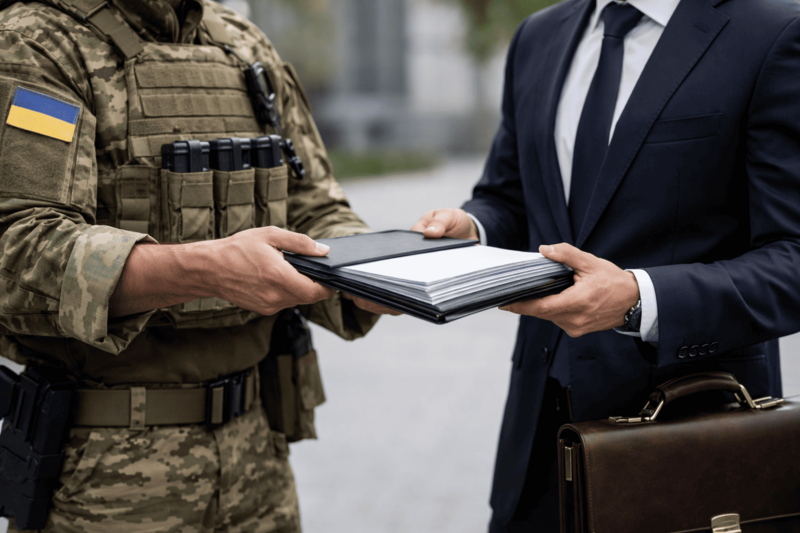
What a reserve battalion is and why people are sent there after AWOL
A reserve battalion is an intermediate link in the procedure for returning after AWOL. A servicemember may be sent there after coming forward so that they are not simply “assigned somewhere,” but so that the further return to service can be processed properly and in accordance with established rules. Those returning after a long absence often go through a reserve battalion because it is necessary to verify documents, clarify the status of the case, and determine the next step.
After arrival at a reserve battalion, they usually verify the servicemember’s identity, their military registration documents, affiliation with a unit, the circumstances of the absence, and the overall status of the return. At this stage, they also clarify whether there is information about the person in the URPTI, whether criminal proceedings have been opened, and whether additional steps are required with an investigator, prosecutor, or the court. In other words, the reserve battalion effectively helps determine which procedure will apply—an internal administrative route only, or one that must account for criminal proceedings.
The reserve battalion also has a practical function: it can be where the issue of further service is resolved. If there is a possibility and approvals, the servicemember may be returned to the previous unit. If that option does not fit or the commander does not agree to take the person back, assignment to another military unit may be considered. Therefore, in such cases a reserve battalion is not a formality, but a real stage where verification, formalization, and the next service decision take place.
A referral letter and the commander’s written consent
What a referral letter is
A referral letter is essentially a document from a military unit that is ready to accept the servicemember for service or supports their reassignment. In practice, it may also be called written consent, a recommendation letter, or an approval, depending on the situation. For returning after AWOL, this document is often key because it shows that the servicemember is not merely stating a desire to return, but actually has a unit willing to accept them.
When the commander’s written consent is required
The commander’s written consent is especially important when criminal proceedings already exist and it is necessary to trigger the mechanism for release from criminal liability under Part 5 of Article 401 of the CCU. In that situation, without written confirmation that a unit is ready to take the servicemember back (either to the previous or a new place of service), the mechanism may simply not work. Verbal agreements are not enough. Even if the case has not yet reached a procedural stage, a referral letter is still highly desirable because it strengthens the servicemember’s position at all subsequent steps.
What to do if the commander refuses to take the servicemember back
A refusal by the previous commander does not mean return is impossible. In many cases, the servicemember can return not to the former unit, but to another military unit. That is why, if there is a conflict with the previous unit or it is obvious the former commander will not consent, you should in parallel look for a new unit willing to issue a written referral letter. This is often more practical and faster than trying to “push through” a previous unit that does not want to take the person back.
Can you move to another military unit
Yes, returning is possible not only to the former unit but also to another military unit. This directly matches the logic of the mechanism: the servicemember declares the intent to continue service in that or another unit or at another place of service. But in practice, simply saying “I want another unit” is not enough. You need documentary support: written approval, a referral letter, or a recommendation letter from the unit that is ready to accept the servicemember.
What documents are needed to return after AWOL
To return after AWOL, it is important not only to declare the intent to continue service, but also to prepare documents right away—without them the procedure may be delayed. First of all, you need a basic package: a passport or other identity document, taxpayer number (RNOKPP), a military ID or other military registration documents, and everything that confirms service and affiliation with a specific military unit.
If the absence was related to circumstances that may matter for the case, those should be confirmed separately. This includes medical certificates, discharge summaries, treatment documents, proof of family circumstances, or other materials explaining the reasons for absence. Explanations alone are usually not enough, so anything that can be documented should be collected in advance.
If the case is already in the URPTI or the issue must be resolved through an investigator, prosecutor, or the court, additional materials are prepared for such an application. Typically, this includes a petition stating the intent to return to service, documents confirming servicemember status, the commander’s written consent or a referral letter, and other attachments confirming readiness to continue service.
Together with a lawyer for AWOL cases, it is worth checking in advance whether the document package is complete, whether there is sufficient evidence, whether statements are properly prepared, and whether any materials are missing that will determine the ability to launch the return procedure.
What to do if the case is already in the URPTI or a court stage is required
If the case is already in the URPTI, you need to act quickly and competently. In this situation, returning is no longer just an internal matter between the servicemember and the unit. An investigator and prosecutor appear, and sometimes the court, so all steps must be taken with the criminal process in mind. First, you need to determine who is handling the proceedings, what stage it is at, whether there is a notice of suspicion, whether court involvement is needed, and whether a military unit is ready to provide written consent for continued service. Then a petition about the intent to return to service is filed, with all required documents attached. If the court releases the person from criminal liability, the next step must be the actual reinstatement in service in the prescribed manner.
Delaying a voluntary return in this situation is especially dangerous. The longer a person does nothing, the higher the chance the case will move along the standard path: suspicion, search, preventive measure, indictment. The value of voluntary return is exactly that it shows readiness to continue service before the case fully shifts into a strict accusatory scenario.
What happens if you do not return or if AWOL is repeated
If you do not return after AWOL, the case rarely “goes away on its own.” In practice, it can end with a search, entry into the URPTI, detention, suspicion, and court proceedings. Under martial law, the sanction under Article 407 of the CCU is harsh, and repeated AWOL makes the situation even worse. In addition, the special mechanism for release from criminal liability is legally tied specifically to the first incident. Therefore, a repeated episode means a significantly weaker defense position and far fewer opportunities to arrange reinstatement into service in a safer procedural format.
The “I’ll just wait it out” strategy usually ends badly also because the person loses control over the situation. While the servicemember does not act, the system acts for them: the unit prepares materials, law enforcement enters data, and the case moves into the criminal realm. As a result, something that could have been handled through voluntary return and a clearly built legal position turns into a full criminal case with much worse consequences.
Typical mistakes when returning after AWOL
One of the most common mistakes is applying without documents and without checking whether your data are already in the URPTI. The second is misunderstanding the role of a reserve battalion: some people perceive it as a place of punishment and avoid going there, even though it is often the most convenient way to go through the return procedure. The third mistake is ignoring deadlines and the procedural status of the case. If there is already a pre-trial investigation, you must not simply “return,” but properly file a petition with the investigator, prosecutor, or the court. The fourth mistake is acting on your own without a coordinated legal position. In such cases, careless explanations, chaotic visits to different authorities, and the absence of properly executed written consent from the commander often only make the situation worse.
Conclusion
Returning after AWOL is possible even in a difficult situation, but success depends not on an abstract desire to “fix everything,” but on a properly structured action plan. You need to clarify the status of the case, determine whether there is an URPTI entry, verify whether this is the first incident, prepare documents, obtain the commander’s written consent or a referral letter from a new unit, and, if necessary, file a petition with the investigator, prosecutor, or the court. The worst decision is to waste time. The best is to act immediately, with a clear legal position and an understanding of what exactly is needed to return to service without unnecessary risks.
FAQ
What is AWOL under Article 407 of the Criminal Code of Ukraine?
AWOL is unauthorized leaving of a military unit or place of service, as well as failure to report without valid reasons after leave, treatment, a business trip, transfer, or other prescribed situations.
What punishment is provided for AWOL during martial law?
Under Article 407 of the CCU, during martial law, AWOL lasting more than three days may lead to imprisonment for five to ten years.
Is it possible to return after AWOL without a conviction?
Yes, in certain cases this is possible if the offense was committed for the first time, there is a voluntary petition stating the intent to return to service, and the commander gives written consent for continued service.
Under what conditions can criminal liability for AWOL be avoided?
The incident must be the first one, the servicemember must voluntarily submit a petition stating the intent to return to service, and the commander must give written approval for continued service.
What does a reserve battalion do in the return procedure?
A reserve battalion accepts the servicemember, checks documents, helps clarify the URPTI status, organizes the further procedure, and facilitates the return to service.
Can you return not to your old unit but to another military unit?
Yes, in some cases this is possible if there is documentary approval and the unit is ready to accept the servicemember for service.
What documents are needed to return after AWOL?
Typically, you need identity documents, military registration documents, a report or petition requesting return, and, if available, a referral letter, the commander’s written consent, and evidence of valid reasons for the absence.
Do you need to file a petition with an investigator or prosecutor?
Yes, if your data are already in the URPTI and you need to initiate the mechanism for release from criminal liability in order to return to service.
What happens if AWOL is repeated?
Repeated AWOL significantly worsens the legal position, because the special mechanism for release from criminal liability is legally tied to the first incident.
When should you contact an AWOL lawyer?
You should contact a lawyer as soon as you decide to return or learn that the case may already be in the URPTI.

Leave a request for consultation and our specialist will contact you soon!
Leave a request and our specialist will contact you soon!



Fill out the form or contact us in any way convenient for you
Choose the nearest office to you and receive consultations in a convenient format for you