

Charges of treason (attorney under Article 111 of the Criminal Code of Ukraine)
Charges under Article 111 of the Criminal Code of Ukraine are among the most serious in Ukrainian criminal law. Such cases involve high risks for the suspect, strict preventive measures, a significant scope of investigative actions, and heightened attention from law enforcement agencies. At the same time, even in cases of high treason, guilt cannot be presumed: the investigation must prove the specific actions of the person, the presence of intent, the proper subject of the offense, and the causal link between the person’s conduct and harm to the interests of the state.
That is why correct legal qualification is critically important in such proceedings. It is necessary to distinguish high treason from collaboration activity, aiding the aggressor state, and other related offenses. No less important is compliance with procedural safeguards: the lawfulness of detention, searches, serving a notice of suspicion, as well as the relevance and admissibility of evidence.
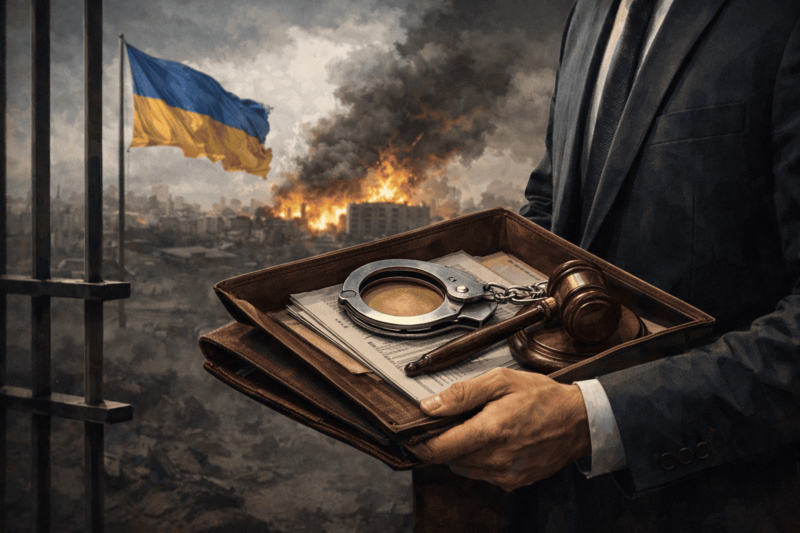
What is high treason under Article 111 of the Criminal Code of Ukraine
High treason under Article 111 of the Criminal Code of Ukraine is an intentional act by a citizen of Ukraine to the detriment of the sovereignty, territorial integrity, defense capability, or the state, economic, or information security of Ukraine. This is not any negative or anti-state behavior in a broad everyday sense, but a specific corpus delicti defined by law.
The subject of this offense can only be a citizen of Ukraine. This is one of the key elements of the offense. If the person is a foreign national or a stateless person, qualification under Article 111 of the Criminal Code of Ukraine, as a general rule, does not apply.
Another fundamental element is direct intent (or other proven intent). To bring a person to criminal liability, it is not enough merely to establish the fact of contact with representatives of the aggressor state or the transfer of certain information. The investigation must prove that the person acted consciously to the detriment of Ukraine, understood the meaning of their actions, and wished or knowingly allowed the relevant consequences to occur.
Which actions may be qualified as high treason
The law expressly treats as forms of high treason: switching to the enemy’s side during an armed conflict, espionage, and providing a foreign state, foreign organization, or their representatives with assistance in conducting subversive activities against Ukraine. These are the core forms, but in practice their content is revealed through specific factual actions.
Switching to the enemy’s side is most often analyzed in the context of service or actual participation in the activities of occupation or hostile structures, when a person consciously takes the side of the opponent during an armed conflict. In 2025, the Supreme Court noted that holding positions in illegal authorities, law-enforcement bodies, or judicial bodies in an occupied territory, under certain circumstances, may constitute not only collaboration activity but also high treason if there is a conscious switch to the enemy’s side and assistance to it.
Espionage within the framework of Article 111 of the Criminal Code of Ukraine concerns the collection, storage, transfer, or other use of information in the interests of a foreign party to the detriment of Ukraine. In practice, this is not necessarily limited to state secrets in the classic sense: case law indicates that assistance in subversive activity may also consist of transferring information that formally is not classified as a state secret but in fact facilitates the enemy.
Providing assistance to a foreign state or its representatives is the broadest form. It may cover transferring data about military facilities, coordinating actions, facilitating occupation forces, logistical support, recruitment, mediation, or other acts that investigators and courts regard as assistance in subversive activities against Ukraine. Precisely because this form is broad, such cases often raise questions about the boundary between Article 111, Article 111-1, Article 111-2, and other provisions.
What Article 111 of the Criminal Code of Ukraine provides for
Article 111 of the Criminal Code of Ukraine contains the basic offense of high treason, separate liability for committing this offense under martial law, and a special ground for exemption from criminal liability in exceptional cases.
Liability in peacetime
In its “basic” construction, Part 1 of Article 111 covers high treason without the qualifying element of martial law. The sanction under this part provides for imprisonment for a term of fifteen years, with or without confiscation of property. Thus, even without the martial-law qualifier, the liability is extremely severe.
Liability under martial law
Part 2 of Article 111 establishes an even harsher sanction if high treason is committed under martial law. Under the current wording, this is punishment in the form of life imprisonment with confiscation of property. This rule has made Article 111 one of the harshest provisions in the entire system of Ukrainian criminal legislation.
When exemption from criminal liability is possible
Part 3 of Article 111 provides an exception. A citizen of Ukraine may be exempted from criminal liability if, while carrying out a criminal task assigned by a foreign state, foreign organization, or their representatives, the person in fact committed no actions and voluntarily reported to state authorities about their connection with them and about the task received. This is a very narrow ground that applies only when all listed conditions are met cumulatively.
What punishment is threatened for high treason
Article 111 of the Criminal Code of Ukraine provides for one of the harshest sanctions in Ukrainian criminal legislation. Under the basic offense, it is 15 years of imprisonment; under martial law, it may be life imprisonment. Confiscation of property is also possible.
The severity of the sanction is explained by the fact that high treason belongs to crimes against the foundations of national security. Therefore, for a person accused under Article 111 of the Criminal Code of Ukraine, it is extremely important from the earliest stage to assess the grounds for suspicion, the correctness of qualification, and the lawfulness of the collected evidence.

How high treason differs from collaboration and related crimes
Correctly differentiating Articles 111, 111-1, and 111-2 of the Criminal Code of Ukraine is fundamentally important, because it determines the scope of liability, the subject of proof, and the defense strategy.
The difference between Article 111 and Article 111-1 of the Criminal Code of Ukraine. Collaboration activity covers various forms of cooperation with the aggressor state or occupation authorities. At the same time, high treason requires establishing an intentional act by a citizen of Ukraine that harms the foundations of the state’s security. In some cases, competition between these articles or their concurrence is possible, but this always depends on the specific circumstances.
The difference between Article 111 and Article 111-2 of the Criminal Code of Ukraine. Aiding the aggressor state has a different legal construction and a different approach to the subject of the crime. If for high treason the decisive factor is the intent of a citizen of Ukraine to act to the detriment of the state, then Article 111-2 focuses on specific assistance to the aggressor state, its armed formations, or occupation administration.
That is why correct qualification is decisive. It affects not only the sanction, but also which circumstances the prosecution must prove.
Which circumstances most often become grounds for suspicion of high treason
In practice, suspicion under Article 111 of the Criminal Code of Ukraine most often arises in cases involving service in occupation structures, transfer of information to the enemy, fire adjustment, assistance to occupation forces, or other forms of conscious cooperation with the aggressor.
Service in occupation structures
One of the most common situations is voluntarily taking a position in illegal authorities, law-enforcement bodies, or judicial structures in an occupied territory and actually performing the relevant functions. According to a review by the Criminal Cassation Court of the Supreme Court, depending on the circumstances, such actions may constitute collaboration activity, high treason, or their concurrence. Key factors include the voluntariness of the conduct, the possibility to avoid cooperation, the nature of the functions performed, and the link between this activity and assistance to the enemy.
Transfer of information to the enemy
This includes transmitting data regarding the deployment of military personnel, equipment, critical infrastructure facilities, or other information that can be used against Ukraine. Even if the information does not formally have a secrecy classification, investigators may treat it as assistance in subversive activity if it in fact aided the enemy.
Fire adjustment or assistance to occupation forces
A separate group consists of cases where a person is alleged to have collected, clarified, or transmitted coordinates, routes, data on movements of equipment or troops. Such actions may be treated as direct assistance to the opponent.
Public or factual cooperation with the aggressor
Public statements by themselves do not always constitute high treason. However, in combination with other evidence they may be used to confirm intent, the nature of connections, and the person’s overall role in cooperation with the enemy.
What evidence is used in high treason cases
Such proceedings may use various sources of evidence: witness statements, digital data from messengers and social networks, photos, videos, documents, expert conclusions, and other materials. At the same time, not only the content of evidence matters, but also the lawfulness of how it was obtained.
Witness statements are often used to confirm contacts, movements, performing certain functions, or transmitting information. But such statements must be evaluated in conjunction with other materials.
Messenger and social media data may include correspondence, geolocation, photos, videos, call logs, and other digital traces. In such cases, authenticity, completeness, and procedural correctness of seizure and recording are critical.
Photos, videos, documents, and other materials may confirm contacts with enemy representatives, presence in certain places, access to information, or participation in occupation structures.
At the same time, a single public post, an isolated screenshot, or a fragment of correspondence is not always sufficient for a conviction. The court must evaluate the totality of evidence and determine whether the person’s actions indeed meet the elements of high treason.
Case law in high treason cases
Case law in high treason cases most often concerns several typical scenarios: service in occupation structures, transferring information to the enemy, facilitating occupation forces, or other forms of assistance in subversive activities against Ukraine.
When examining such cases, courts pay special attention to Ukrainian citizenship, the voluntariness of conduct, the content of intent, the nature of ties with representatives of the aggressor, and the sufficiency of evidence. A separate key issue is the admissibility of evidence and compliance with procedural safeguards when obtaining it.
When a lawyer is needed in a case under Article 111 of the Criminal Code of Ukraine
In high treason cases, a criminal defense lawyer is needed from the very first procedural contact with law enforcement. The earlier the defense starts working on the case, the more opportunities there are to timely assess risks, document violations, and form a legal position.
At the stage of detention or search
During detention, it is necessary immediately to check the lawfulness of the grounds, the proper drafting of the protocol, compliance with the person’s rights, and access to a lawyer. The Criminal Procedure Code sets out the cases when an authorized person may detain a suspect without a court order. During a search, a lawyer is needed to control the scope of the investigative action, document violations, object to unlawful seizure of property, devices, or documents, and later challenge procedural violations.
At this stage, the lawyer verifies the lawfulness of law enforcement actions, monitors compliance with the person’s rights, documents violations, and responds to unlawful seizure of property, documents, or equipment.
When a notice of suspicion is served
At this stage, defense counsel analyzes the factual narrative of suspicion, legal qualification, the scope of the alleged actions, and the evidence relied upon by the investigation. It is often here that it becomes clear whether there are grounds to raise the issue of an unsubstantiated suspicion, overqualification, or the need to immediately prepare an alternative legal position. At this moment, it is also important to check what information has been entered into the Unified Register of Pre-trial Investigations (URPI) and what is contained in the URPI extract.
At the pre-trial investigation stage
During the pre-trial investigation, the lawyer monitors interrogations, investigative experiments, device inspections, expert examinations, seizure of property, temporary access to items and documents, as well as issues of admissibility of evidence. In cases under Article 111, the foundation of the future procedural fight is laid precisely at the pre-trial stage.
During trial
In court, the defense checks whether the prosecution has proven all elements of the offense, whether intent is established, whether evidence is admissible, and whether there are grounds for acquittal or requalification. In cases with such a severe sanction, a professionally built defense is decisive.
What a lawyer does in high treason cases
In cases under Article 111 of the Criminal Code of Ukraine, a lawyer first of all analyzes the correctness of qualification and verifies whether the person’s actions are truly covered by the offense of high treason rather than another related crime, including offenses related to abuse of office.
Next, defense counsel forms a legal position: refutes individual episodes, analyzes the presence or absence of intent, argues for the inadmissibility of evidence, checks the lawfulness of investigative actions, and protects the client during interrogations, searches, and other procedural measures.
In addition, the lawyer represents the client’s interests in court, files motions and complaints, raises issues of excluding inadmissible evidence, and defends the position of the defense at all stages of the proceedings.
Frequently asked questions
What is considered high treason under Article 111 of the Criminal Code of Ukraine?
It is an intentional act by a citizen of Ukraine to the detriment of sovereignty, defense capability, territorial integrity, or state security, in the forms expressly provided by law: switching to the enemy’s side, espionage, or assistance in subversive activities against Ukraine.
What punishment is provided for high treason in Ukraine?
For the basic offense—15 years of imprisonment. If the offense is committed under martial law, life imprisonment is possible. The law also provides for confiscation of property.
How does high treason differ from collaboration activity?
High treason is a crime by a citizen of Ukraine against the foundations of national security with the mandatory element of intent to act to the detriment of the state. Collaboration activity covers other forms of cooperation with the aggressor or occupation authorities and has a separate legal construction.
How does high treason differ from aiding the aggressor state?
Aiding the aggressor state is a separate related offense focusing on specific assistance to the aggressor, its armed formations, or occupation administration. For Article 111 of the Criminal Code of Ukraine, the decisive element is proving intent to act specifically to the detriment of Ukraine.
Can a person be acquitted in a high treason case?
Yes. As in any criminal case, a conviction is possible only if guilt is proven by proper and admissible evidence.
Is requalification from Article 111 of the Criminal Code of Ukraine to another article possible?
Yes, if the factual circumstances of the case better correspond to the elements of another offense, for example collaboration activity or aiding the aggressor state.
When should you contact a lawyer in a high treason case?
Immediately—from the moment of detention, search, summons for interrogation, service of suspicion, or even earlier if there is a risk of law enforcement interest.
Conclusion
Article 111 of the Criminal Code of Ukraine provides liability for one of the most serious crimes against the foundations of Ukraine’s national security. In such cases, correct qualification, analysis of intent, evaluation of evidence, and compliance with procedural safeguards are decisive.
If a person has been detained, served with a notice of suspicion, or there is a risk of prosecution under Article 111 of the Criminal Code of Ukraine, it is advisable to contact a lawyer as early as possible to assess the situation, form a legal position, and ensure defense at every stage of the proceedings.

Leave a request for consultation and our specialist will contact you soon!
Leave a request and our specialist will contact you soon!
More useful information


Fill out the form or contact us in any way convenient for you
Choose the nearest office to you and receive consultations in a convenient format for you