

Combatant status is official confirmation of participation in hostilities and the basis for receiving state guarantees: benefits, payments, medical care, additional leave, and other rights.
In practice, obtaining the status is often delayed because of errors in documents, the absence of a certificate of direct participation, failure to enter data into the register, or a formal refusal by the commission.
A military lawyer will help check the documents, determine the correct path for obtaining the status, prepare appeals, support the procedure for obtaining combatant status, or appeal a refusal.

What combatant status is and what Combatant means
Combatant means a participant in hostilities. In simple terms, this is a person who directly participated in carrying out combat, service-combat, or other tasks related to the defense of Ukraine.
The status of a participant in hostilities confirms that the person’s participation in such tasks has been officially recognized by the state. Only after the status is confirmed can the person use the benefits and social guarantees provided by law. The main benefits for Combatant are defined by the Law of Ukraine “On the Status of War Veterans and Guarantees of Their Social Protection”.
Important: the mere fact of service or being in a combat area does not always automatically mean the person can use benefits. The status must be confirmed by documents, entered into the relevant registers, or certified.
Who has the right to obtain combatant status
The right to Combatant status may belong to servicemembers of the Armed Forces of Ukraine, other military formations, law enforcement agencies, volunteers, and other persons who, in cases defined by law, participated in carrying out tasks for the defense of Ukraine.
The key factor is not simply being in the military or in a combat area, but documented participation in specific combat or service-combat tasks.
That is why in each situation it is necessary to check the documents: dates, unit, area where tasks were performed, orders, certificates, and other official confirmations. Separate cases may require an individual legal assessment.
How to obtain Combatant status in 2026
In 2026, there are several practical ways to obtain Combatant status: automatically through entering data into the Unified State Register of War Veterans, through the military unit and the commission, by independent application, or through a representative. The procedure for granting the status is regulated, in particular, by Cabinet of Ministers Resolution No. 413.
| Path to obtaining status | Who it is suitable for | What is important to check |
| Automatically through the register | Active servicemembers | Whether data, periods of participation, and unit are entered |
| Through the military unit | Servicemembers currently serving | Whether the documents were submitted by the command |
| Through the TCC and SP | Persons discharged from service | Whether there are copies of certificates, orders, and extracts |
| Independently or through a representative | If the documents were not submitted or there is a dispute | Whether there is enough evidence for the commission |
Automatic granting of status through the register
For active servicemembers, Combatant status may be granted automatically after an authorized person of the military unit enters data into the Unified State Register of War Veterans. The Ministry of Veterans Affairs explains that data on participation in hostilities is entered through an electronic cabinet, and the system processes it through the Unified State Register of War Veterans.
What a servicemember should check:
- whether your data has been entered;
- whether the periods of task performance are indicated correctly;
- whether the dates match combat orders and certificates;
- whether the unit is indicated correctly;
- whether the military unit has supporting documents.
If the information was not entered or was entered with errors, it is worth submitting a written report, recording the request, and demanding correction of the data. If the unit does not respond, an attorney request or complaint can be prepared.
Obtaining status through the military unit or commission
The classic path looks like this: documents are prepared, the military unit transfers the materials for commission review, the commission checks the grounds and makes a decision. After a positive decision, the person receives confirmation of status and a certificate.
The role of the commander or authorized person of the unit is very important. Problems often arise at this stage: documents are not transferred, the certificate is prepared with errors, a certain period of service is not included, or extracts from combat documents are not added.
If the servicemember has already been discharged from service
If the servicemember has already been discharged, the path to obtaining the status may go through the TCC and SP or through an independent application to the relevant commission — depending on the situation, the service body, and the available documents.
It is especially important to keep or restore copies of:
- the certificate of direct participation;
- extracts from combat orders;
- reports;
- documents on injury, concussion, or treatment;
- service characteristics;
- other materials confirming the performance of tasks.
If the unit has been disbanded, documents have been lost, or the command does not respond, it is better not to submit an incomplete package at random. First, it is worth checking what evidence can be obtained officially.
What documents are needed to obtain Combatant status
The list of documents may differ depending on the applicant’s category, the body reviewing the materials, and the method of submission. But most often the following are needed:
- an application in the established form;
- a 3×4 photo;
- consent to personal data processing;
- passport;
- RNOKPP;
- military registration documents;
- documents confirming participation in hostilities;
- certificate of direct participation;
- extracts from orders, combat logs, or other service materials.
| Document | What it is needed for | Where to obtain it | Typical problems |
| Application | Launches the review procedure | Commission, TCC, authorized body | Incorrect form or incomplete data |
| 3×4 photo | For the certificate | Independently | Wrong format |
| Certificate of participation | Main proof of task performance | Military unit | No dates, signature, or seal |
| Extracts from orders | Confirm involvement | Unit, archive, command | Missing or incomplete |
| Documents on injury | Additional evidence | Medical institutions, MMC | Not connected to the period of tasks |
Before submission, check whether the dates match in all documents, whether the military unit, position, area of task performance, signature, and seal are indicated correctly.
Form 6 of the Armed Forces of Ukraine / certificate of direct participation in hostilities
In practice, “Form 6 of the Armed Forces of Ukraine” is a certificate of a person’s direct participation in measures necessary to ensure the defense of Ukraine. It is provided for by Appendix 6 to the procedure for granting Combatant status and is one of the key documents for confirming participation in the relevant measures.
To obtain such a certificate, a servicemember usually submits a report to the commander or authorized person. In the report, it is worth requesting issuance of the certificate with indication of specific periods, unit, area of task performance, and grounds for participation.
Dates are especially important. If the certificate indicates an incorrect period or does not mention part of the combat tasks, this may become a reason for refusal or delay in review.
What can confirm participation in hostilities if there is no Form 6
If there is no Form 6 certificate, this does not always mean that it is impossible to obtain the status. But other official evidence must be collected.
This may include:
- extracts from combat orders;
- combat logs;
- command reports;
- documents on injury or concussion;
- medical documents;
- service materials;
- archive responses;
- other official confirmations.
Statements from fellow servicemembers may help, but they usually do not replace official documents. Therefore, the lawyer’s task is not simply to “write an application,” but to collect the evidence base so that the commission has grounds to make a positive decision.
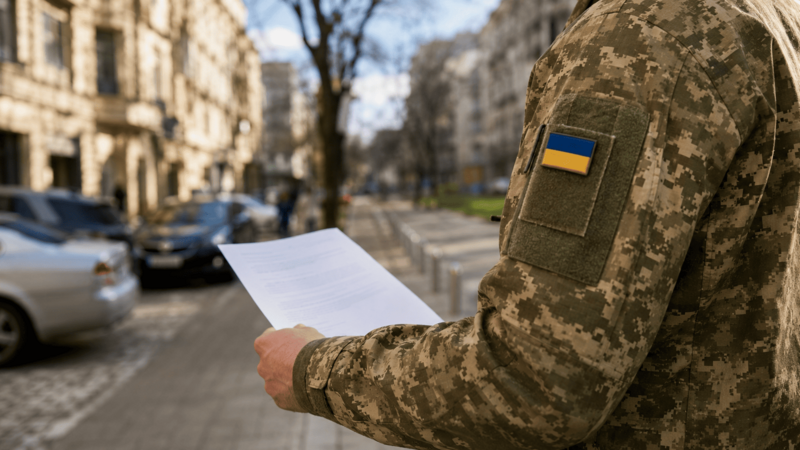
How long documents are reviewed and when the right to benefits appears
The timeframes depend on the method of submission, completeness of the documents, the work of the military unit, the commission, and the body that makes the decision. If the document package is complete and the data are correct, the procedure goes faster. If there are errors or key documents are missing, the review may be delayed.
The right to actually use benefits is usually connected not only with the fact of service, but with confirmation of status, entering information into the relevant registers, or receiving a certificate.
If the documents are “stuck,” you need to:
- submit a written request about the status of the review;
- receive a response or record its absence;
- check at which stage the procedure stopped;
- submit a repeated request or complaint;
- if necessary — involve a lawyer.
What benefits Combatant status provides in 2026
Combatant status gives the right to a number of social guarantees. Some of them work after presenting the certificate, while others must be processed separately through the PFU, employer, medical institution, or local authorities.
| Benefit category | Essence | Where to apply | Is separate processing required? |
| Housing and utilities | 75% discount within the established limits | PFU | Yes |
| Medical care | Medicines, treatment, rehabilitation | Medical institutions, specialized bodies | Depends on the service |
| Transport | Free or discounted travel | Carrier, local authorities | Often the certificate is enough |
| Employment | Additional leave, guarantees | Employer | Yes, through an application |
| Education | Education-related benefits | Educational institution, social protection bodies | Yes |
Benefits for housing and utility services
Participants in hostilities are entitled to a 75% discount on housing, utility services, and fuel within the established social norms. The PFU separately explains that to obtain the benefit, it is necessary to submit an application and the required documents, in particular a passport, RNOKPP, Combatant certificate, bank details, and data on personal utility service accounts.
Important: the Combatant certificate itself does not always automatically activate the utility benefit. It must be processed separately.
Algorithm:
- prepare the Combatant certificate, passport, RNOKPP;
- collect personal account numbers;
- prepare the IBAN;
- submit an application to the PFU;
- check whether the benefit is reflected in the charges.
Medical benefits and rehabilitation
Combatant holders may have the right to free prescription medicines, priority dental prosthetics, sanatorium-resort treatment, medical examinations, psychological support, and rehabilitation services.
In practice, problems arise when a person is told: “there is no funding,” “there are no places,” “apply later,” or “your status is not confirmed in the system.” In such cases, you need to demand a written response and check whether the documents are prepared correctly.
Transport benefits
Combatant status may give the right to free or discounted travel on certain types of transport. But practical implementation depends on the type of transport, local rules, funding, and documents required by the carrier.
If travel is refused without legal grounds, it is worth recording the situation, keeping the ticket or other evidence, and filing a complaint.
Labor guarantees and Combatant leave
Participants in hostilities have the right to additional paid leave of 14 calendar days per year. This right is provided by leave legislation.
To use this right, the employee submits an application to the employer and attaches a copy of the Combatant certificate. In the application, it is advisable to state directly that this concerns additional leave as a participant in hostilities.
Example wording:
“I request that I be granted additional paid leave as a participant in hostilities for 14 calendar days from ___ to ___ in accordance with current legislation. I attach a copy of my Combatant certificate.”
Educational, housing, and land guarantees
Combatant status may give the right to certain educational, housing, and land guarantees, as well as benefits for children of participants in hostilities.
At the same time, it is important not to confuse the right to a benefit with automatic receipt of housing, land, or compensation. In many cases, it is necessary to register, go through a procedure, submit an application, confirm the grounds, and wait for the decision of the relevant body.
Therefore, before submitting documents, it is worth checking the specific program, requirements for the applicant, and list of documents.
Combatant payments: what financial assistance may be available
Benefits and payments are different things. Combatant status does not mean that a person automatically receives a monthly “allowance simply for the status.”
Possible payments depend on the specific situation:
- annual one-time cash payment for Independence Day;
- local veteran support programs;
- payments in case of injury, disability, or death;
- pension supplements;
- other types of assistance on separate grounds.
The annual one-time payment for Independence Day is made according to the procedure and in the amounts determined by the Cabinet of Ministers of Ukraine within budget allocations. The Ministry of Veterans Affairs also explains that the amount of such payment is determined separately by the government.
In 2026, the current amounts should be checked after approval of the relevant Cabinet of Ministers resolution or through official explanations of the PFU and the Ministry of Veterans Affairs.
Is there a Combatant allowance?
The word “allowance” is often used inaccurately. It is necessary to distinguish:
- monetary support of a servicemember during service;
- combat payments;
- social assistance;
- annual one-time payments;
- local programs;
- pension supplements.
If you were told that “there should be an allowance for Combatant,” you need to check exactly which payment is meant, on what basis it is accrued, and which body must pay it.
How to process benefits after obtaining Combatant status
After receiving the status, it is important not to stop at the certificate itself. To actually use benefits, each of them must be processed with the relevant body.
General algorithm:
- determine which specific benefit is needed;
- check who provides it;
- prepare documents;
- submit an application;
- receive a decision;
- check the accrual or actual application of the benefit.
For housing and utility benefits, contact the PFU. For medical benefits — medical institutions or specialized bodies. For leave — the employer. For local programs — local self-government bodies or the CNAP.
How to check Combatant status and data in the register
Checking the status may be connected with the Unified State Register of War Veterans, the electronic veteran certificate, or official state services. The Ministry of Veterans Affairs notes that information about persons who have been granted Combatant status is received by the Unified State Register of War Veterans from the relevant commissions and bodies.
You should not look for a “universal open Combatant register” where anyone can check any person. If the data are not displayed or there are errors, you need to apply through official channels: the military unit, commission, Ministry of Veterans Affairs, PFU, or another body depending on the problem.
What to do if Combatant status was refused or processing is delayed
Refusal or delay is one of the most common reasons for contacting a military lawyer. Typical problems:
- incomplete document package;
- no Form 6;
- errors in dates;
- incorrectly indicated unit;
- the unit did not enter the data;
- the commission issued a formal refusal;
- the PFU does not accrue the benefit;
- documents are “stuck” without a response.
Action algorithm:
- obtain a written response or record its absence;
- check the grounds for refusal;
- collect additional evidence;
- correct errors in the documents;
- submit the documents again or appeal the decision;
- seek legal assistance if the authorities do not respond.
When to contact a lawyer
A lawyer is not needed in every situation. If the documents are complete, the military unit acts promptly, and the data are entered correctly, the procedure may pass without a dispute.
But a lawyer’s assistance is truly important if:
- you were refused Combatant status;
- the unit does not issue the certificate;
- Form 6 is prepared with errors;
- there are discrepancies in dates;
- documents are lost;
- you have already been discharged from service;
- the PFU does not accrue the benefit;
- it is necessary to appeal the commission’s decision.
We can check your documents, identify weak points, and suggest which path will be the fastest in your situation.

Typical mistakes when applying for Combatant status
Most often, problems arise not because there is no right to the status, but because the documents are prepared incorrectly.
Typical mistakes:
- submitting an incomplete package;
- absence of a certificate of direct participation;
- mismatch of dates in different documents;
- absence of a signature or seal;
- incorrectly indicated military unit;
- submitting only verbal requests without recording them;
- waiting without written requests;
- confusion between benefits, payments, and combat bonuses.
To avoid refusal, it is better to check the document package before submission, rather than after a negative decision by the commission.
Myths about Combatant status
Myth 1. “If I was in a combat zone, the status will be granted automatically in any case.”
In fact, documentary confirmation of participation in the relevant tasks is required.
Myth 2. “A Combatant certificate automatically activates all benefits.”
Some benefits must be processed separately, for example benefits for housing and utility services through the PFU.
Myth 3. “A Combatant always receives a monthly allowance.”
Combatant status does not equal an automatic monthly payment. A specific legal basis must be checked.
Myth 4. “If there is no Form 6, there is no chance.”
Form 6 is very important, but in certain situations other official evidence can also be collected.
Brief conclusions
- Combatant status is official confirmation of participation in hostilities.
- The right to the status must be confirmed by documents.
- The certificate of direct participation, dates, orders, and other evidence are of key importance.
- Benefits are not always activated automatically after receiving the certificate.
- Payments depend on the specific ground, not only on the fact of having the status.
- If you were refused or the documents are not moving forward, the decision can be appealed.
Need help obtaining Combatant status, benefits, or payments? Contact Pravovyi Lider for a consultation — we will check your situation and documents and advise you on how to proceed.
FAQ
What does Combatant mean and who is considered a participant in hostilities?
Combatant means a participant in hostilities. This status is granted to persons who directly participated in carrying out combat or service tasks and can confirm this with documents.
How to obtain Combatant status in 2026?
Combatant status can be obtained through entering data into the Unified State Register of War Veterans, through the military unit, commission, TCC and SP, or by submitting an independent application.
What documents are needed to apply for Combatant status?
Usually, an application, photo, passport, RNOKPP, military documents, a certificate of direct participation in hostilities, extracts from orders, and other supporting materials are required.
What is Form No. 6 of the Armed Forces of Ukraine and can Combatant status be obtained without it?
Form No. 6 is a certificate of direct participation in measures to ensure the defense of Ukraine. It is one of the key documents, but in certain cases participation can also be confirmed by other official evidence.
What benefits does a participant in hostilities have for utility services?
A Combatant has the right to a 75% discount on housing and utility payments within the limits established by law. To receive it, an application and documents must be submitted separately to the PFU.
What payments are provided for Combatant in 2026?
Possible payments include annual one-time financial assistance, local support programs, pension supplements, and other payments on separate grounds. Current amounts should be checked according to official decisions of the Cabinet of Ministers of Ukraine, the PFU, or the Ministry of Veterans Affairs.
What to do if Combatant status was refused or the review of documents is delayed?
In case of refusal or delay in reviewing documents, it is necessary to obtain a written response stating the grounds. Then the reasons should be analyzed, additional evidence collected if necessary, and the documents submitted again or the decision appealed administratively or in court. In complex cases, it is advisable to seek legal assistance from a military lawyer.


Services



What they say about us
Leave a request for consultation and our specialist will contact you soon!

Хочу щиро подякувати адвокату Валентині Костенко за професійну допомогу у складній справі щодо перерахунку пенсії. Пенсійний фонд протягом тривалого часу відмовлявся зараховувати мій пільговий стаж, посилаючись на неточності в документах. Валентина ретельно опрацювала всі матеріали, відновила необхідні архівні довідки та підготувала переконливу позовну заяву. Завдяки її наполегливості суд задовольнив мої вимоги — пенсію перерахували, а також виплатили недоплачені кошти за попередні роки. Це справжній фахівець, який відстоює інтереси клієнта до кінця. Рекомендую всім, хто зіткнувся з подібною проблемою!
Дуже вдячний Валентині Костенко за допомогу у перерахунку пенсії. Ситуація була заплутана, Пенсійний фонд відмовлявся враховувати мій стаж роботи на пільгових умовах. Валентина детально вивчила мої документи, знайшла помилки в архівних довідках і склала чіткий позов. Суд став на мій бік, пенсію перерахували і навіть виплатили різницю за минулі роки. Це юрист, який дійсно знає свою справу і бореться до кінця. Дякую!
Хочу висловити величезну подяку Валентині Костенко з компанії «Правовий Лідер». Зіткнувся з проблемою отримання статусу УБД та виплат, які затримувалися вже понад рік. Самостійні спроби нічого не дали, бюрократія просто вбивала. Валентина взялася за справу дуже професійно: швидко склала позов, грамотно підійшла до збору доказів. Завдяки її наполегливості суд ми виграли, і я нарешті отримав справедливі виплати. Рекомендую всім військовим, хто потребує захисту!
Дякую, за виграну справу. Адвокати просто майстри своєї справи, особливо Кордій Наталія Геннадіївна, дуже швидко зрозуміла суть справи та професійно довела мою невинуватість)) Дякую, за вашу роботу.
Дякую Богдану Михайловичу за допомогу та підтримку. Спочатку було багато незрозумілого, але після консультації стало чітко, що робити і які документи потрібні. Професійно, швидко та по суті.
Хочу подякувати старшому юристу Валентині Миколаївні за допомогу у сімейній справі. Вона супроводжувала мене під час розлучення та поділу майна — все пройшло спокійно й без зайвих нервів. Завдяки її порадам я змогла захистити свої права та уникнути конфліктів. Дуже вдячна за чуйність і професіоналізм!
Fill out the form or contact us in any way convenient for you
Choose the nearest office to you and receive consultations in a convenient format for you